


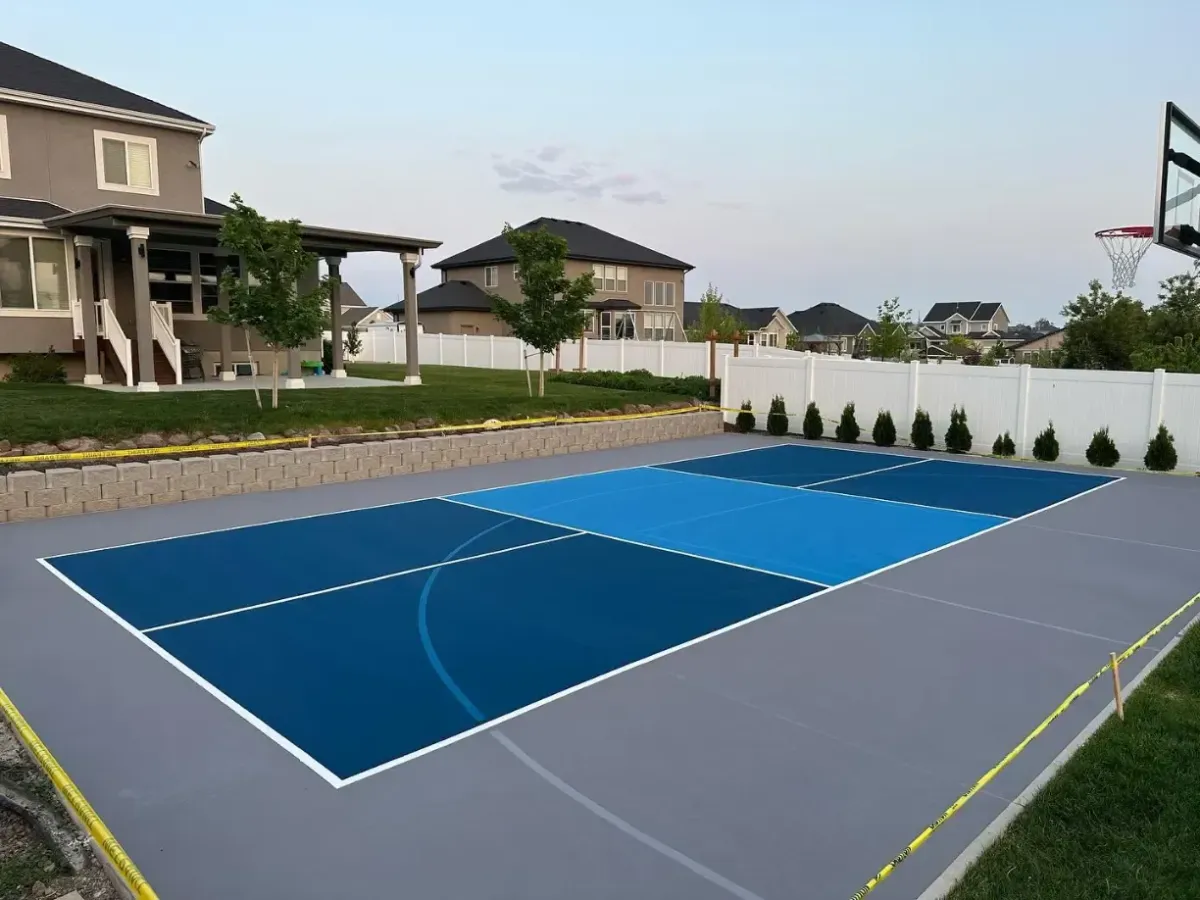
Basketball and Pickleball Court Combination: How to Build a Smart Multi-Sport Space
A well-planned basketball and pickleball court combination gives homeowners, schools, churches, HOAs, and recreation spaces a flexible court that supports two of the most popular activities in one efficient footprint. In Southern Utah, where outdoor living is part of everyday life, a multi-sport court can turn an underused yard or paved area into a high-value space for fitness, family time, and friendly competition.
The key is designing the court correctly from the start. Basketball and pickleball have different movement patterns, line layouts, equipment needs, and safety requirements. A good combination court should feel natural for both sports, not like one game was awkwardly forced onto another surface.
Because Southern Utah brings intense sun, heat, dust, and seasonal weather shifts, surface selection and maintenance planning are especially important. The right system should offer traction, comfort, durability, and clear line visibility while standing up to local conditions.
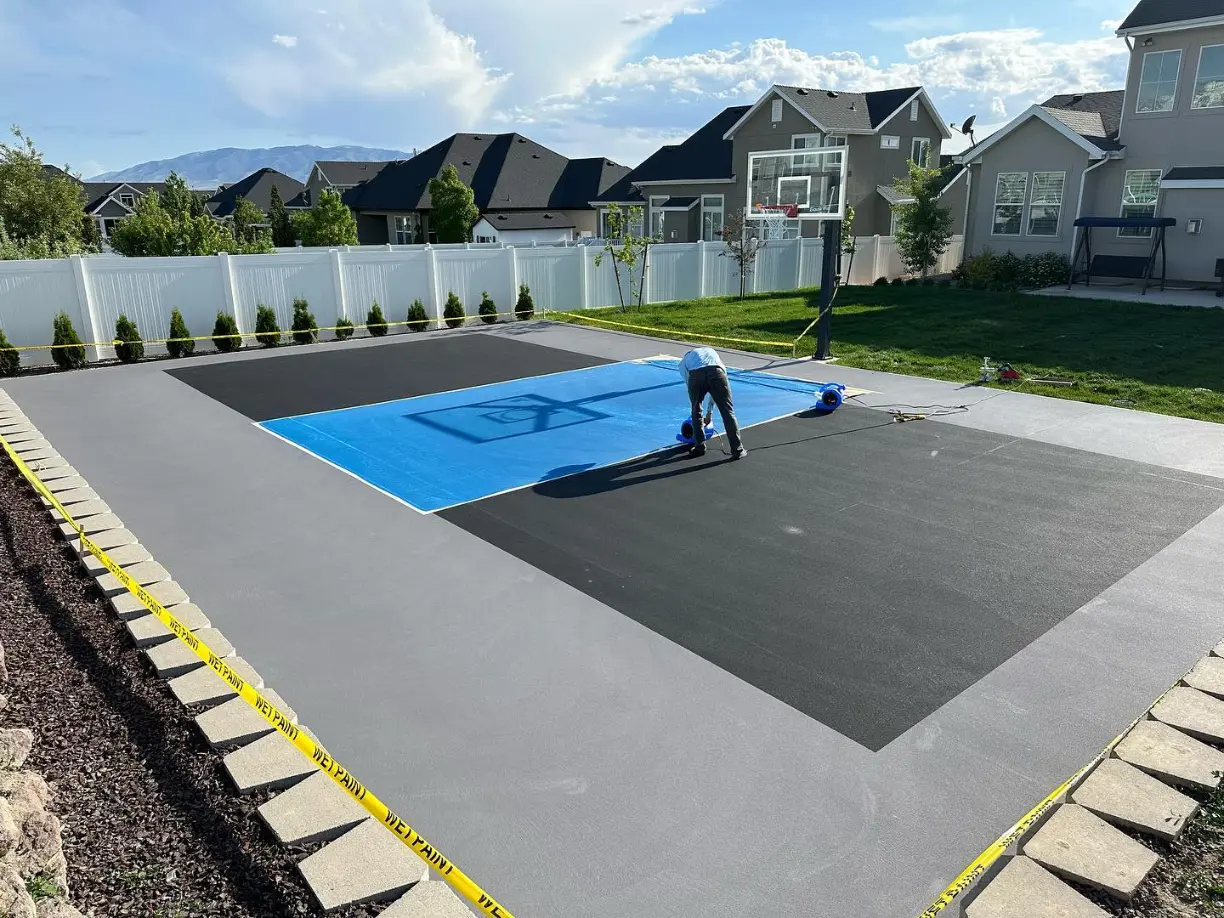
Planning a basketball and pickleball court combination for the Right Space
The first step is understanding how much room you have and how the court will be used. Pickleball has a smaller playing area than basketball, which makes it easier to integrate into a backyard or community court design.
A regulation pickleball court measures 20 feet by 44 feet. However, the recommended total playing footprint is larger because players need safe run-off space around the court. For comfortable recreational play, many property owners aim for a total area closer to 30 feet by 60 feet when space allows.
Basketball requires more flexibility. A full basketball court is much larger than most residential spaces can support, so many combination courts are designed around a half-court basketball layout. This works well because a half-court space can often accommodate a full pickleball layout with thoughtful planning.
Before finalizing dimensions, consider:
How many people will use the court at once
Whether the space is for casual or competitive play
If younger children will use adjustable hoops
Whether fencing, lighting, seating, or shade will be added
How much safety buffer is available around the court
Whether the court will be used for other sports later
Ace Coatings South can help property owners evaluate whether an existing slab, driveway extension, or open yard space is suitable for a multi-sport layout. This early planning step helps avoid issues with cramped boundaries, confusing lines, or unsafe player movement.
Space and Layout Tips for a basketball and pickleball court combination
The best layout is usually the one that prioritizes safety and simplicity. Even when space is limited, players should have enough room to stop, pivot, and move laterally without running into fences, walls, posts, or landscaping.
For backyard projects, a half-court basketball setup with a pickleball court overlay is often the most practical option. The basketball hoop can be positioned at one end, while a portable pickleball net can be placed across the center line when needed.
A few layout tips can make the court more enjoyable:
Keep the pickleball court centered when possible
Avoid placing permanent net posts where basketball players may drive or rebound
Allow extra space behind the basketball key for movement
Use fencing only after confirming safe run-off distances
Plan gate placement so it does not interfere with play
Consider sun orientation to reduce glare during common play times
Line planning is also important. Basketball and pickleball lines can overlap, but they should not compete visually. The primary sport can use one bold line color, while the secondary sport can use a contrasting but slightly less dominant color. This keeps the court clean and readable during fast play.
Choosing Surfaces for a basketball and pickleball court combination That Performs Well
The surface system determines how the court feels underfoot, how the ball responds, and how long the court lasts. A multi-sport court needs to support quick pickleball footwork and basketball movement, including running, pivoting, jumping, and landing.
Concrete and asphalt are common base options. Concrete is durable and stable when properly installed, while asphalt may be more budget-friendly but can be more prone to heat-related softening and cracking over time. In Southern Utah, where surface temperatures can climb quickly, base preparation and coating quality matter.
Acrylic sport coatings are a popular choice because they provide reliable traction, strong color options, and a professional court appearance. These coatings can be customized with texture to support both pickleball and basketball play.
For added comfort, some owners choose cushioned acrylic systems. These include resilient layers beneath the color coats to reduce impact on knees, ankles, hips, and backs. This can be especially valuable for families, older players, and communities where the court will see frequent use.
Modular sport tiles are another option for certain projects. They can offer drainage and shock absorption, though they have a different feel from traditional acrylic courts. The best choice depends on the court’s base, budget, climate exposure, and preferred play experience.
When designing a pickleball layout, dimensions and line accuracy should be carefully checked against USA Pickleball guidance to support consistent recreational play.
Surface Materials for a basketball and pickleball court combination
Each surface system has advantages. The right choice depends on how the court will be used, how long the owner expects it to last, and how much maintenance they are willing to perform.
Acrylic hardcourt systems
These are common for outdoor sport courts because they create a clean, consistent playing surface. They also allow for strong line definition and custom color combinations.
Cushioned acrylic systems
These offer more comfort than a standard hardcourt. They are helpful for multi-generational use and for players who want reduced joint impact.
Concrete base systems
Concrete can provide long-term stability when installed correctly. Proper reinforcement, control of cracking, and drainage design are essential.
Asphalt base systems
Asphalt may reduce initial cost, but it needs proper compaction, drainage, and ongoing care. In hot climates, quality installation is especially important.
Modular tile systems
Tiles can be useful for some backyard courts, particularly where drainage and impact absorption are priorities. They should be installed over a stable, level base.
Color selection also matters. In Southern Utah, lighter court colors may help reduce heat absorption compared with darker shades. Good contrast between basketball and pickleball lines will also make the court easier to use for both sports.
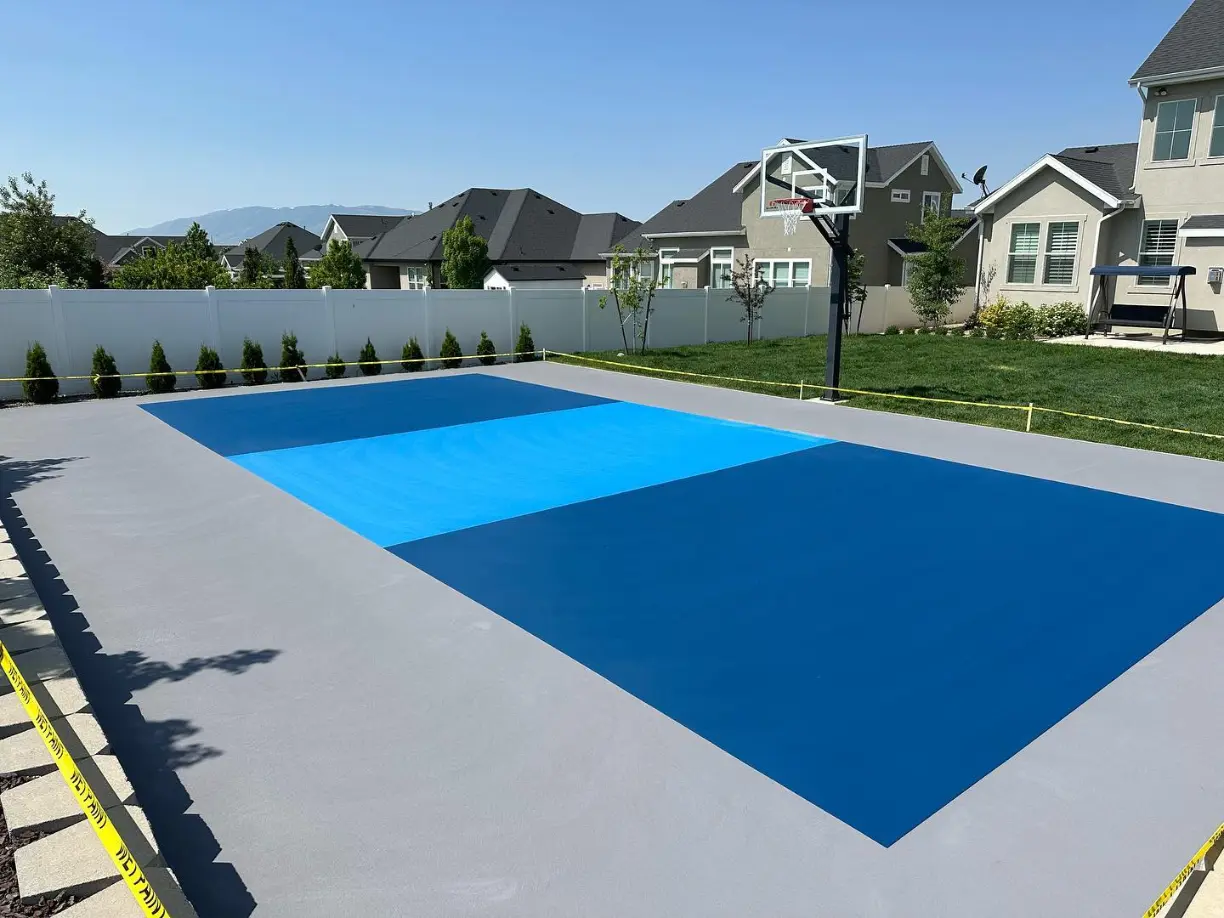
Building a basketball and pickleball court combination for Long-Term Use
A successful multi-sport court is designed not only for opening day, but for years of use. That means the project should include drainage, equipment, accessories, and maintenance from the beginning.
Drainage is one of the most important construction details. Water should move off the surface efficiently without creating puddles or low spots. Even in drier climates, seasonal storms can expose poor grading quickly. Standing water can stain the surface, create slip hazards, and shorten coating life.
Equipment should also be selected carefully. For a combination court, portable pickleball nets are often the safest and most flexible choice. They can be moved off the playing area when basketball is being played, reducing trip hazards and keeping the court open.
For basketball, an adjustable in-ground hoop is usually ideal for family use. Regulation basketball rim height is 10 feet, but adjustable systems make the court more accessible for younger players.
Lighting can also make the court more useful, especially during hot months when evening play is more comfortable. LED court lighting should be planned to provide even visibility while limiting glare and light spill toward neighboring properties.
Ace Coatings South can help owners think through how equipment placement, line striping, coatings, and accessories work together. A court that looks good but feels crowded or confusing will not deliver the same long-term value as one designed as a complete system.
Maintenance Tips for a basketball and pickleball court combination
Routine maintenance helps protect the surface and keep play safe. Southern Utah courts often deal with dust, sun exposure, windblown debris, and heat, so regular care is important.
Recommended maintenance includes:
Sweep or blow off dust, leaves, and debris regularly
Rinse the surface when dirt begins to build up
Use mild cleaners rather than harsh chemicals
Avoid dragging furniture, grills, or metal equipment across the court
Inspect painted lines for fading or wear
Check for cracks after seasonal temperature changes
Keep drainage edges open and clear
Store portable nets properly when not in use
Plan resurfacing before traction becomes poor
Acrylic sport surfaces typically need resurfacing after years of use, depending on traffic, exposure, and maintenance. Waiting too long can lead to slippery areas, faded lines, surface breakdown, and more expensive repairs.
Ace Coatings South can evaluate whether a court needs light repair, resurfacing, or more extensive correction. That guidance is especially helpful for existing basketball pads being converted into multi-sport courts.
Conclusion
A basketball and pickleball court combination is one of the most practical ways to maximize an outdoor recreation space. With the right layout, surface system, equipment, and maintenance plan, one court can support fast-paced basketball, social pickleball games, family activities, and neighborhood gatherings.
The best results come from treating the project as a true athletic surface, not just a painted slab. Proper dimensions, drainage, line planning, coating selection, and equipment placement all affect how the court performs over time.
For Southern Utah properties, durability and heat-conscious design should be part of every decision. When planned correctly, a multi-sport court can provide years of safe, active, and enjoyable use.
