


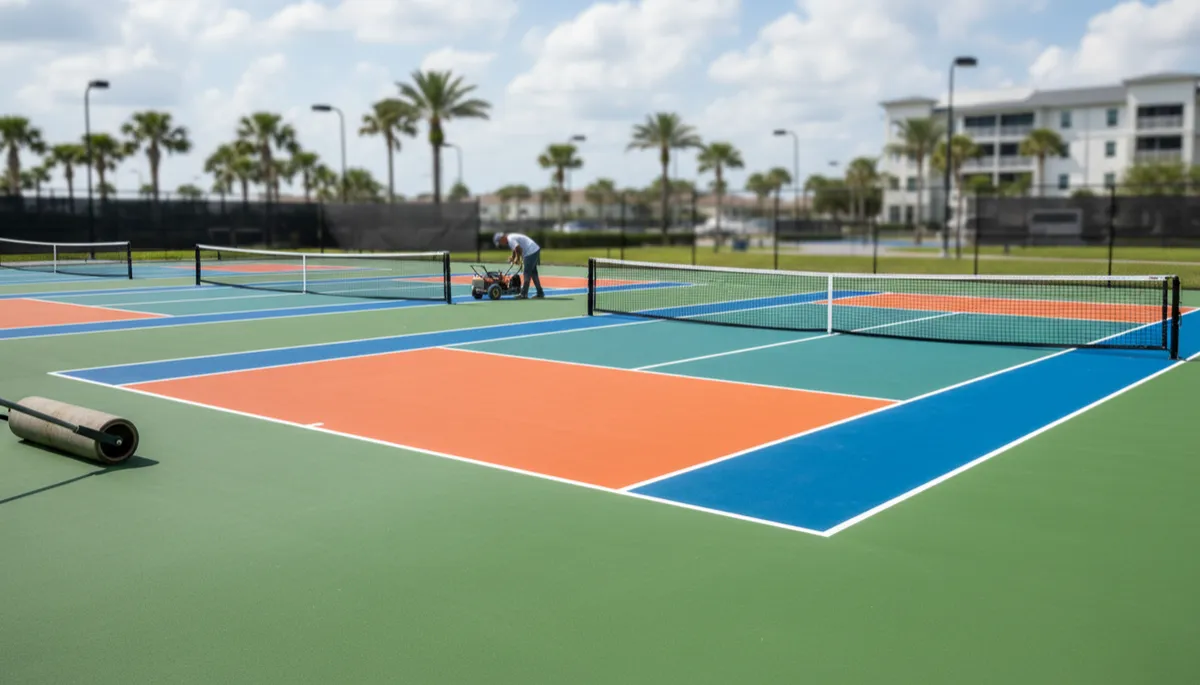
Convert Tennis Court to Pickleball: Costs & Options
Pickleball, Court Conversion, Home Improvement
Convert Tennis Court to Pickleball: Cost, Options, and What to Expect in 2026
Wondering what it really costs to convert a tennis court to pickleball in 2026? For most homeowners and communities, a basic conversion ranges from a few hundred dollars for simple line striping to $15,000–$50,000+ for a full resurfaced, permanent layout. The exact convert tennis court to pickleball cost depends on your court’s condition, how many pickleball courts you want, and whether you want a shared-use or fully dedicated setup designed to last for years.
Why Converting a Tennis Court to Pickleball Makes Sense Now
Pickleball continues to be one of the fastest-growing sports in the United States, and many homeowners’ associations, private residences, and neighborhood clubs are looking at their underused tennis courts as prime real estate for new play spaces. Converting an existing court is usually far more cost-effective than building a brand-new pickleball court from scratch, which often runs $20,000–$50,000 or more for a single outdoor court, according to recent national estimates from Angi and HomeGuide.
Instead of paying for full site preparation, new concrete or asphalt, and all-new fencing, you’re working with a ready-made pad. That means most of your budget can go toward resurfacing, layout, and long-lasting coatings that improve play and extend the life of the court you already have. For many property owners, this is the sweet spot between budget and performance.
Three Main Conversion Levels and Typical Cost Ranges
When you ask about the cost to convert a tennis court to pickleball, it helps to think in terms of three main project types. Each comes with its own price range and long-term trade-offs.
1. Simple Dual-Use Line Striping ($300–$2,500)
The lowest-cost option is to keep your tennis court as-is and simply add pickleball lines in a contrasting color. This is often called “blended” or dual-use striping. In 2026, homeowners can expect to pay roughly $300–$800 for basic line painting, though some regions and more complex layouts can push the price up to around $2,500, based on recent conversion cost guides from pickleball-focused resources like PickleballCosts and PickleballDimensions.
Pros: Lowest upfront cost, keeps tennis playable, quick turnaround.
Cons: Tennis lines can be visually distracting; surface condition is unchanged; you’re still playing on a tennis footprint rather than a fully optimized pickleball layout.
2. Dedicated Conversion on Existing Surface ($2,000–$20,000)
The next step up is a dedicated conversion that still uses the existing asphalt or concrete, but reconfigures the layout for pickleball only. Typically, a single tennis court footprint can accommodate two to four pickleball courts, depending on your goals and available space. Recent national data suggests these projects often land between $5,000 and $20,000 per tennis court footprint, with some simpler layouts starting closer to $2,000 when minimal repairs are needed.
Pros: Better use of space, more courts for family or community play, dedicated pickleball lines and nets.
Cons: Surface issues (cracks, low spots) may still show through if not addressed; not as durable or visually refreshed as a full resurfacing project.
3. Full Resurfacing and Permanent Pickleball Layout ($15,000–$50,000+)
A full resurfaced conversion is the premium option. This approach repairs structural problems, applies new acrylic coatings, lays out dedicated pickleball courts, and installs permanent net posts. Nationally, conversion guides report that these projects often fall in the $15,000–$35,000 range for a basic resurface plus conversion, with more complex four-court layouts and fencing updates reaching $20,000–$50,000+ depending on region and scope.
Pros: Like getting a brand-new facility; smoother play, better ball bounce, and a modern look that can boost property appeal.
Cons: Higher upfront investment; best suited for homes and communities committed to pickleball for the long term.
💡 Budget Tip: Converting to multiple pickleball courts at once usually lowers the per-court cost, thanks to shared preparation and layout work.
Key Cost Drivers to Keep in Mind for 2026
Even within the ranges above, your final convert tennis court to pickleball cost can vary significantly. Here are the main factors that typically move the needle up or down:
Court condition: Minor crack repair and cleaning might add $500–$1,000, but serious structural issues can require more extensive resurfacing or overlays, pushing your budget higher.
Surface type: Asphalt is often less expensive to repair than post-tensioned concrete, but concrete can offer better long-term performance when properly coated.
Number of courts: Converting a single tennis court into four pickleball courts usually brings down the per-court cost compared to a one- or two-court layout, because preparation, mobilization, and layout work are shared.
Accessories and add-ons: Fencing changes, divider nets, benches, and lighting upgrades can each add several thousand dollars, but they also elevate the overall playing experience and safety.
Local labor and climate: Regional labor rates and weather conditions influence material choices and installation methods, which can affect both cost and longevity.
How Professional Coatings and Layout Add Value
Beyond the basic numbers, the real value of a quality conversion lies in how the court looks, feels, and plays. Professional sports coatings help create consistent ball bounce, reduce surface glare, and enhance traction for safer movement. Properly installed coatings also protect the underlying asphalt or concrete from moisture and UV damage, extending the life of your investment and lowering long-term maintenance costs.
Organizations like USA Pickleball provide construction guidelines that cover recommended dimensions, clearances, and surface characteristics. Following these best practices—paired with regionally appropriate coatings and materials—helps ensure that your converted court doesn’t just look like pickleball, but actually plays like a proper, regulation-style surface.
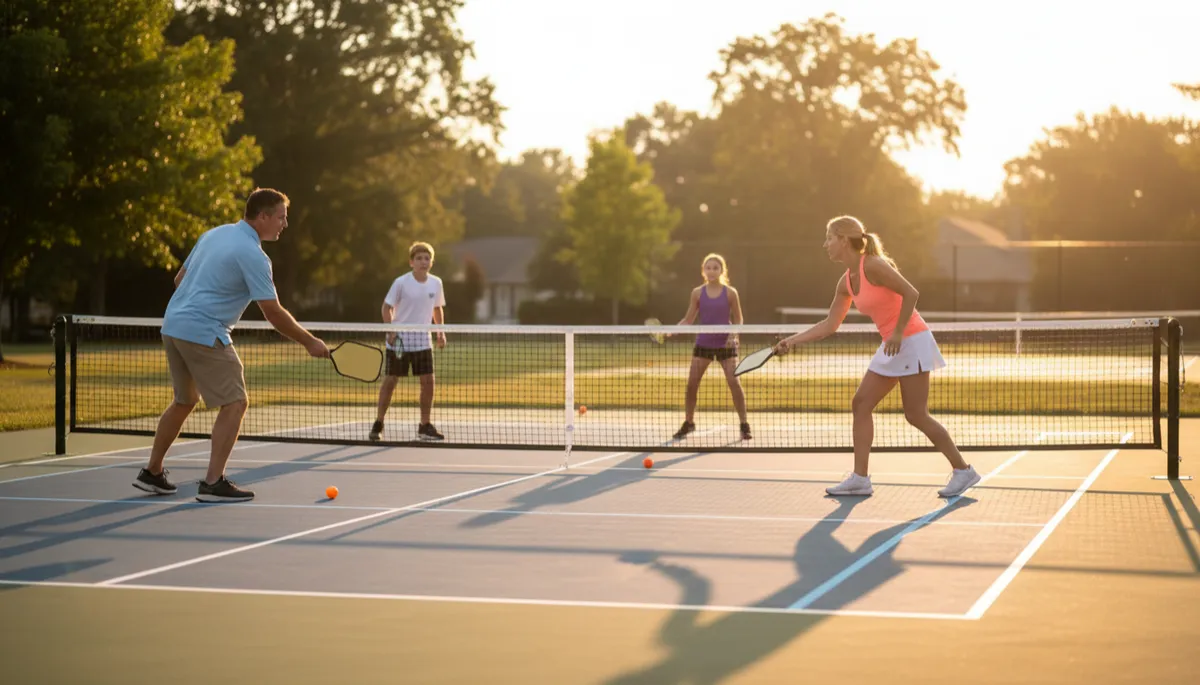
A quality resurfaced conversion feels like a brand-new court under your feet.
What to Expect When You Work with Ace Coatings South
Choosing the right partner is just as important as choosing the right conversion level. Ace Coatings South focuses on helping homeowners and communities transform aging tennis courts into modern, attractive pickleball spaces that feel great to play on and look right at home in neutral, understated surroundings. From the first walkthrough to the final line striping, you get clear communication about scope, timelines, and budget so there are no surprises on the final invoice.
A typical project starts with a detailed surface assessment to identify cracks, low spots, or drainage issues. Next comes a customized plan that might include crack repair, patching, leveling, and the selection of an acrylic coating system suited to your climate. Layout and striping follow, along with net post placement and, if desired, additional features such as perimeter fencing adjustments or court numbering for multi-court setups. Throughout the process, the goal is to maximize value—getting you the best possible playing experience for every dollar you invest.
📌 Key Takeaway: A thoughtful conversion plan can often turn one underused tennis court into a vibrant, multi-court pickleball hub for family, friends, and neighbors.
Budgeting Your Project: Sample Scenarios for Homeowners
To help you visualize how these ranges play out in the real world, here are a few simplified examples of what different homeowners might spend, based on recent 2026 pricing trends:
Backyard with a solid tennis slab: Light crack repair ($800), cleaning and prep ($400), new acrylic coating ($4,000), and layout for two pickleball courts plus nets ($1,200) could bring the total to around $6,500–$7,000 for a fresh, dedicated setup.
Older court with visible wear and drainage issues: More extensive repair and leveling, a premium coating system, and a four-court layout might reasonably reach $18,000–$30,000, depending on the extent of underlying issues and design choices.
HOA shared-use conversion: A community that still wants tennis may opt for blended lines and portable pickleball nets, keeping costs closer to $2,000–$5,000 while still expanding recreational options.
These are just examples, but they highlight a key point: the same tennis footprint can support very different budgets and outcomes, from minimal upgrades to a full “wow factor” renovation that feels like a new amenity entirely.
Ready to Explore Your Own Tennis-to-Pickleball Conversion?
If you’re serious about turning an aging or underused tennis court into a pickleball destination, the next step is to get a site-specific estimate. Every court is different, and a quick visual inspection can uncover opportunities to save money—or reasons to invest a bit more to avoid problems down the road. For a tailored quote and expert guidance, you can contact us at Ace Coatings South and book a tennis to pickleball court construction consultation that fits your goals and budget.
Whether you’re envisioning a simple dual-use setup or a fully resurfaced, multi-court layout, planning now ensures your project is ready for peak playing season. With the right partner, your convert tennis court to pickleball cost becomes a smart, long-term investment in healthier living, stronger community connections, and a backyard or neighborhood space you’ll be proud to show off for years to come.
