


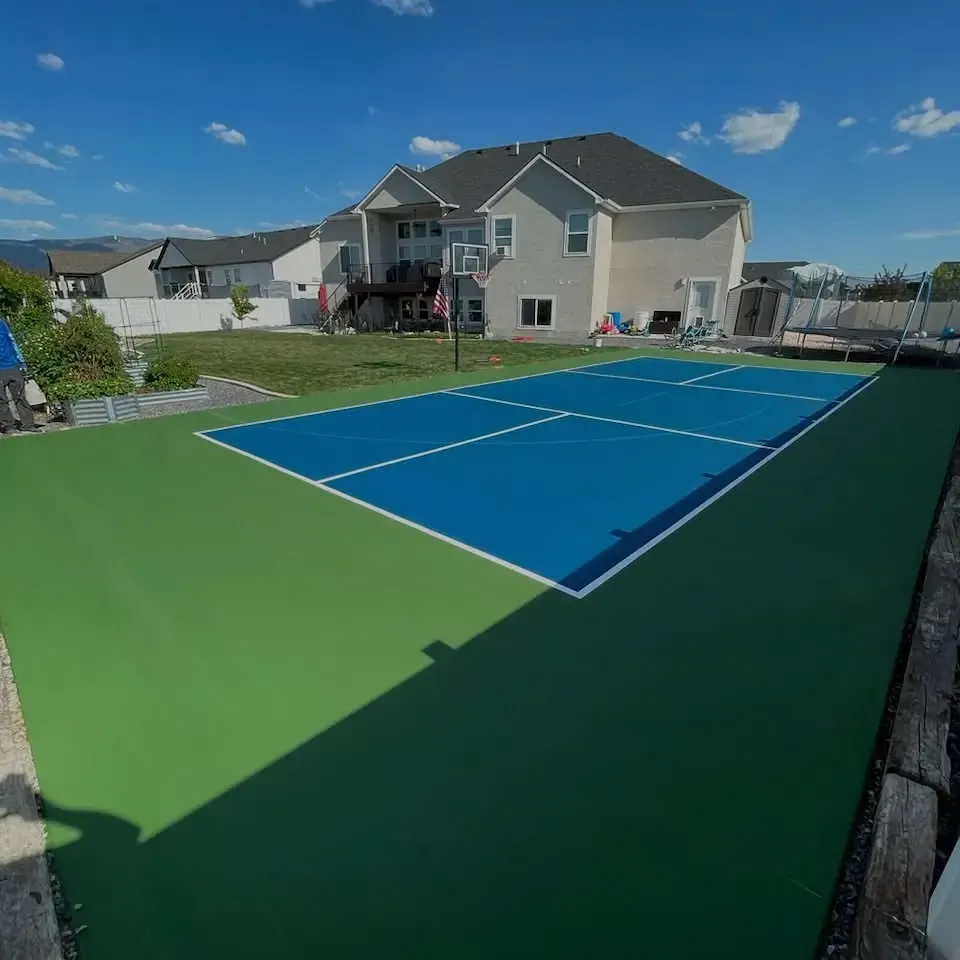
custom pickleball court installers
Bringing pickleball home is an exciting upgrade, but a court that plays well for years requires more than a slab and painted lines. Working with experienced custom pickleball court installers helps ensure the layout, base, drainage, surfacing, accessories, and long-term maintenance plan all support safe, consistent play. For homeowners, HOAs, schools, and private recreation spaces, Ace Coatings South approaches each court as a complete athletic surface system rather than a basic backyard improvement.
Pickleball has become a favorite for families, neighbors, and community groups because it is social, competitive, and accessible. Still, the quality of the court directly affects the experience. A poor base can crack. A slick surface can create safety issues. Inaccurate striping can frustrate players. Weak drainage can shorten the life of the coating system.
A well-built court, on the other hand, gives players the right bounce, reliable footing, clear boundaries, and enough surrounding space to move comfortably. It also becomes a long-term feature that can support fitness, recreation, and property enjoyment for years.
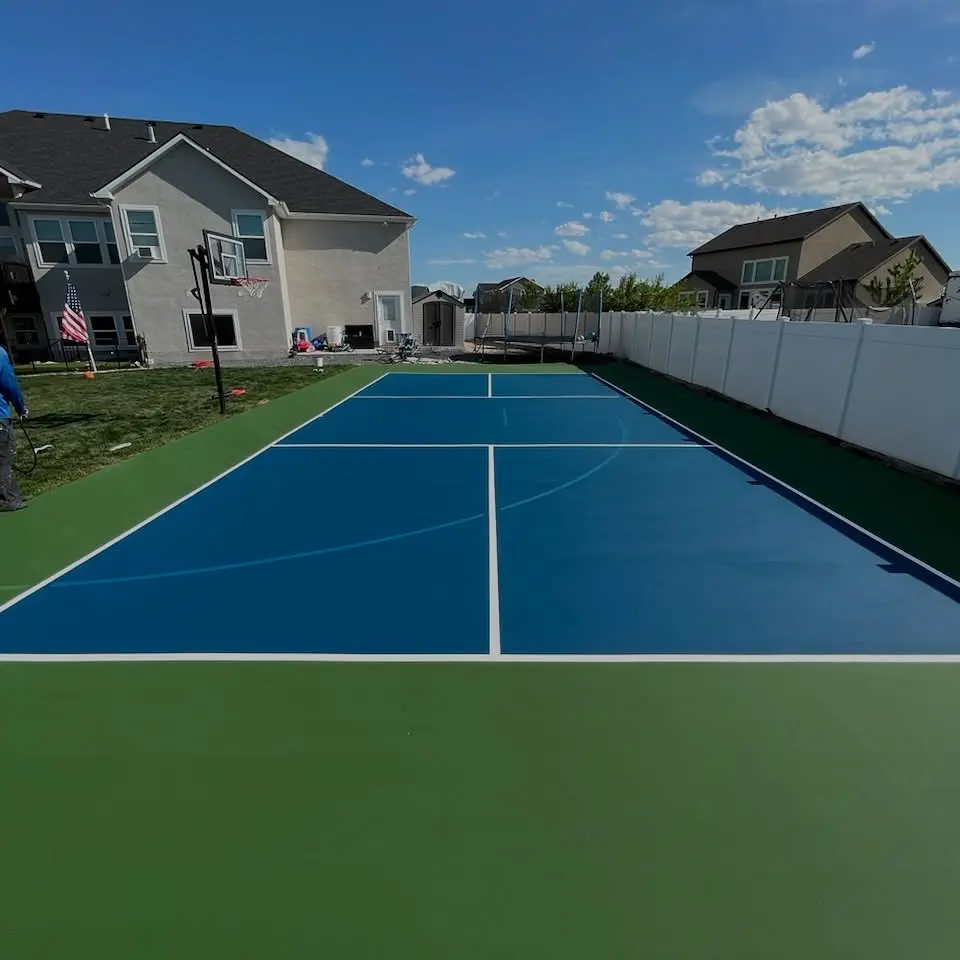
Why custom pickleball court installers matter for court planning
The best court projects begin before construction equipment arrives. Planning determines whether the finished surface feels comfortable, drains properly, meets the needs of the players, and fits the property without creating avoidable problems.
A regulation pickleball court measures 20 feet wide by 44 feet long for both singles and doubles play. However, that is only the striped playing area. Players need additional space behind the baselines and outside the sidelines for movement, safety, and better rallies. A total area of 30 by 60 feet is often treated as a practical minimum, while 34 by 64 feet is preferred for more comfortable play.
During planning, the site should be evaluated for:
Available space and property setbacks.
Sun orientation and glare.
Slope and drainage direction.
Access for construction equipment.
Fencing, gates, and landscaping.
Nearby homes or noise-sensitive areas.
Lighting needs for evening play.
Local permitting or HOA requirements.
Orientation is especially important for outdoor courts. When possible, courts are often placed north to south to reduce sun glare during morning and late-afternoon play. If the property does not allow that orientation, shade, lighting, fencing, and landscaping may need to be planned more carefully.
A professional design also considers how the court will actually be used. A family practice court has different priorities than a neighborhood amenity or a private multi-sport space. Some owners want a dedicated pickleball surface. Others need a court that can also support basketball, tennis practice, or general recreation.
What custom pickleball court installers review before construction
A strong pre-construction review helps avoid expensive changes later. Before the base is installed, the site should be checked for soil stability, drainage, elevation changes, utility conflicts, and surrounding obstacles.
Key questions include:
Is the site level enough for a sports court?
Will water move away from the playing surface?
Is the planned court too close to trees, fences, walls, or slopes?
Will roots create future surface movement?
Can the court fit with safe run-off space?
Are lighting poles, net posts, and fence posts coordinated?
Will neighbors be affected by sound or light spill?
Permits and HOA approvals should also be addressed early. Some areas have rules about impervious surface coverage, property-line setbacks, fence height, lighting direction, and stormwater management. Skipping these steps can delay the project or require changes after plans are already underway.
This is where a specialized court contractor adds value. General concrete or paving work may produce a flat surface, but sports courts require tighter attention to slope, smoothness, surface texture, coating compatibility, and playability.
How custom pickleball court installers build durable surfaces
The base is the foundation of the entire court system. If the base moves, cracks, holds water, or cures poorly, the playing surface will eventually show it. Two common outdoor base options are concrete and asphalt, and each has advantages.
Concrete is often chosen for residential pickleball courts because it can provide long-term stability when properly designed and installed. Post-tension concrete may help reduce cracking and movement, although it requires the right engineering and installation process. New concrete also needs adequate curing time before coatings are applied.
Asphalt can be a practical option for some sites, especially larger recreational facilities. It is often faster to install and may cost less upfront, but it can soften in heat, oxidize over time, and require more maintenance depending on climate and use.
No matter which base is selected, drainage is critical. A court should not hold standing water. Even small puddles can stain the surface, promote mildew, affect traction, and shorten coating life. Proper slope and site drainage help protect the investment.
After the base is ready, the surface coating system is installed. A high-quality outdoor pickleball court commonly uses acrylic coatings designed for sports use. These coatings provide color, texture, traction, and a consistent playing feel.
Some owners also choose cushioned acrylic surfacing. This system uses additional resilient layers beneath the color coats to reduce impact on joints. It does not make the court soft like a playground surface, but it can improve comfort during long play sessions, especially for players who are on the court several times a week.
USA Pickleball court guidance supports the importance of proper dimensions, safe playing space, and consistent court markings, but the quality of the base and coating system is what determines how those specifications perform in real use.
Materials custom pickleball court installers recommend for outdoor play
Outdoor courts need materials that can handle sun exposure, rain, temperature changes, foot traffic, and frequent cleaning. Standard exterior paint is not designed for athletic court movement. It may become slick, fade quickly, or fail under repeated pivoting and shoe abrasion.
Better material choices include:
Acrylic sport surfacing for outdoor durability.
Textured line paint for slip resistance.
UV-stable color coatings to reduce fading.
Crack repair systems compatible with the surface.
Concrete or asphalt primers when required.
Cushioned layers for comfort-focused builds.
Professional net systems with stable posts.
Fencing and windscreens designed for court use.
Color selection should support both visibility and appearance. Many courts use a blue or green playing area with a contrasting perimeter and bright white lines. The goal is to make the ball easy to track and the boundaries easy to read during quick rallies.
Line striping must be precise. Pickleball lines are 2 inches wide, and measurements should be made carefully so the finished court is accurate. The kitchen, baselines, sidelines, and service courts all affect fair play. Clean, high-contrast striping also makes the court more welcoming for beginners.
Hardware matters too. A permanent net system is more stable than a portable setup and gives the court a more professional feel. Fence height, gate placement, and lighting should be coordinated with the way players move around the court. For residential areas, sound control may also be worth discussing. Acoustic fencing, windscreens, landscaping, and court placement can all help reduce disturbance.
Choosing custom pickleball court installers for long-term value
The right installer should understand court construction, not just paving or painting. A pickleball court is a specialized surface with performance expectations. It needs correct grading, accurate layout, appropriate coatings, and details that support safety and durability.
When comparing contractors, ask about:
Experience with pickleball and sports court surfaces.
Photos or examples of completed projects.
Surface preparation methods.
Base construction options.
Drainage planning.
Coating system recommendations.
Line striping process.
Warranty coverage.
Maintenance guidance.
Timeline and curing requirements.
Be cautious with estimates that seem too simple. A reliable proposal should explain what is included, how the surface will be prepared, what materials will be used, and what conditions could affect the final cost. Site access, grading, demolition, drainage, fencing, lighting, and specialty surfacing can all influence pricing.
Long-term value also depends on maintenance. Even a professionally installed court needs routine care. Leaves, dirt, pollen, and standing water should not be left on the surface for long periods. Gentle cleaning helps preserve traction and appearance. Harsh chemicals, pressure washing too aggressively, or dragging heavy objects across the court can damage coatings.
A practical maintenance plan includes:
Removing debris regularly.
Cleaning the court with mild products when needed.
Checking for cracks or coating wear.
Keeping irrigation away from the playing surface.
Inspecting drains and low spots after storms.
Re-striping when lines begin to fade.
Resurfacing when the coating system reaches the end of its service life.
Most outdoor courts eventually need resurfacing. The timing depends on use, weather, drainage, shade, and maintenance habits. Addressing small issues early is usually more cost-effective than waiting until the surface is badly worn.
Questions custom pickleball court installers should answer clearly
Before hiring a contractor, homeowners should feel comfortable asking direct questions. Clear answers are a sign of experience and professionalism.
Helpful questions include:
What total court size do you recommend for my property?
Should this court be concrete, asphalt, or another system?
How will you manage drainage?
What coating system do you recommend and why?
Is cushioned surfacing worth considering for my use?
How long should the base cure before surfacing?
What happens if cracks appear later?
Can lighting or fencing be added now or in a later phase?
How do you reduce glare, noise, and maintenance issues?
What care instructions will I receive after installation?
Ace Coatings South helps property owners think through these details so the finished court supports real play, not just a clean installation photo. The best results come from matching the design to the site, the players, the budget, and the expected level of use.
A private pickleball court can be a meaningful investment in health, family time, and community. It gives players the convenience of practicing at home, hosting friendly matches, and enjoying a professional-feeling surface without waiting for public court availability.
The key is building it correctly from the start. With the right planning, base construction, surface materials, accessories, and maintenance strategy, a backyard or community pickleball court can deliver years of safe, enjoyable play.
