


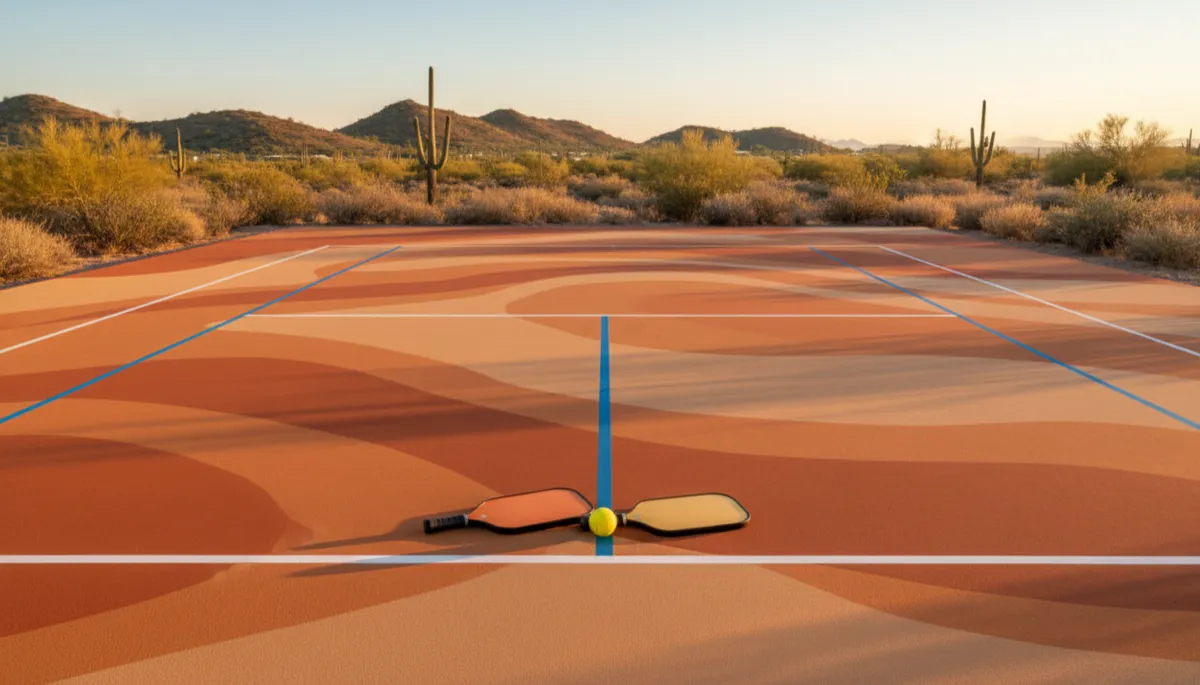
Design Desert Color Pickleball Courts
Home Improvement, Pickleball Courts, Outdoor Living
Designing Beautiful Desert Color Pickleball Courts for Your Home or Community
Thinking about adding pickleball to your backyard, HOA, or community space in the Southwest or another dry, sunny region? Choosing the right surface colors is just as important as picking a quality coating system. Neutral, sand-inspired palettes help your court blend naturally with stone, stucco, and xeriscape landscaping, while still meeting performance and visibility guidelines from organizations like USA Pickleball. In this guide, you’ll learn how to plan, design, and care for desert color pickleball courts that look stunning and play great in real-world conditions.
Why Desert-Inspired Court Colors Are So Popular
For many homeowners and communities, a pickleball court is more than a sport surface—it becomes a focal point of the outdoor living area. Bold blues and greens can be fun, but in arid or sun-drenched regions, softer desert tones often feel more natural and timeless. Think warm sand, light taupe, stone, and soft clay hues that echo the surrounding landscape, rooftops, and hardscape materials.
These neutral colors offer several advantages for individuals and consumer-focused projects:
They visually blend with stucco homes, pavers, and gravel, instead of clashing with them.
They reflect harsh sunlight more gently than very dark colors, helping reduce surface heat.
They age gracefully, hiding dust and minor wear better than ultra-bright tones.
When done right, your court looks like it truly belongs on the property, not like an afterthought dropped on top of the landscape. That’s especially important if you’re thinking about resale value or HOA aesthetics.
Balancing Beauty with Playability and Safety
While color choice is a design decision, your court still needs to play well. That means considering contrast, ball visibility, and line clarity, not just what looks good in photos. Guidelines from USA Pickleball emphasize visibility and safety, especially for players with varying levels of vision and mobility.
Here are a few practical tips to keep your neutral-toned court both attractive and functional:
Use subtle contrast between in-bounds and out-of-bounds areas. For example, a light sand playing area with a slightly deeper taupe perimeter still looks cohesive but helps players see boundaries.
Keep lines bright and crisp. White or off-white lines work well on most desert palettes, as long as they’re applied cleanly and maintained over time.
Consider ball color. If you often play with yellow pickleballs, avoid court colors that are too close to that same shade so the ball doesn’t get lost against the surface.
Popular Desert-Tone Color Combinations for Home Courts
If you’re not sure where to start, it helps to see a few tried-and-true combinations that work beautifully in neutral outdoor spaces. Here are some ideas you can discuss with your coating professional:
Soft Sand & Stone: A light beige playing surface with a slightly darker stone-colored border for subtle contrast and a calm, resort-like feel.
Clay & Cream: A muted clay or adobe tone in the non-volley zone, surrounded by a lighter cream or sand for the rest of the court, echoing traditional desert architecture.
Stone Gray & Taupe: A cooler, stone-gray playing area with warm taupe edges, perfect if your home includes gray pavers or modern concrete details.
The goal is a palette that looks intentional next to your patio furniture, pool deck, fencing, and planting beds. Pulling a color from your roof tile, stucco, or masonry is a smart way to ensure everything ties together.
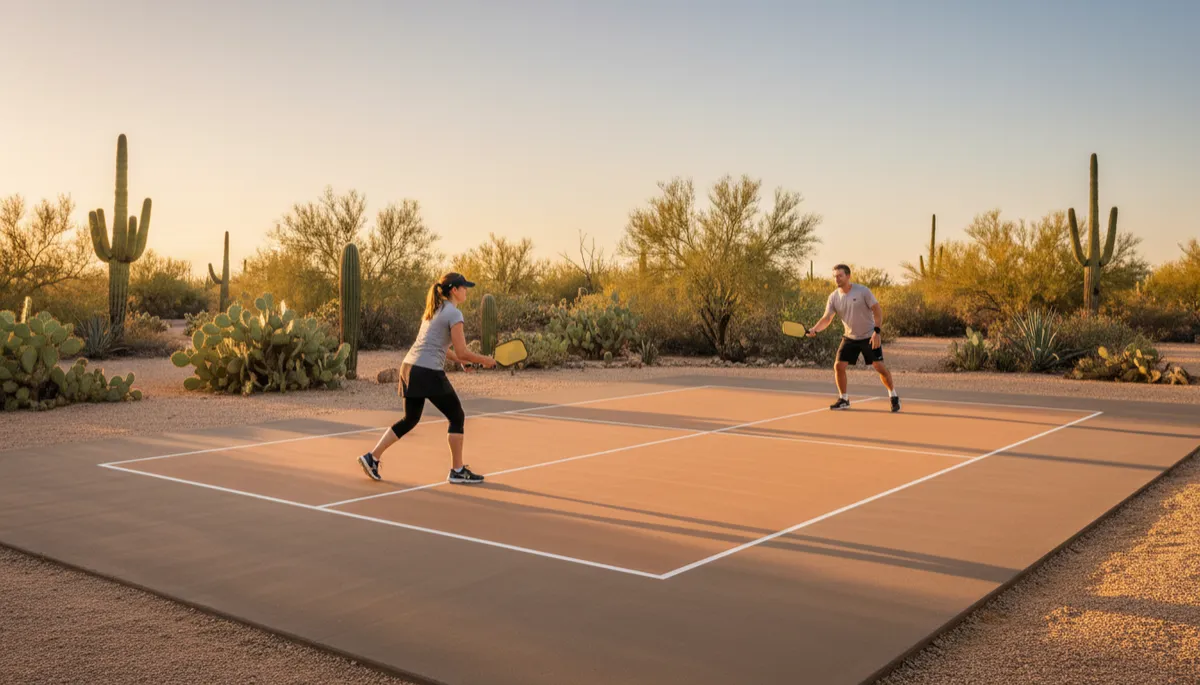
Neutral desert tones help backyard courts blend with landscaping and outdoor living spaces.
Considering Climate: Heat, Sun, and Surface Comfort
In hot, sunny climates, surface temperature and durability become major concerns. Dark surfaces can absorb and hold heat, making mid-day play uncomfortable. Lighter desert colors, on the other hand, tend to reflect more sunlight, which can help keep the court a bit cooler underfoot and reduce heat-related surface stress over time.
UV exposure is another factor. High-quality coating systems are formulated to resist fading, chalking, and cracking, but choosing mid-to-light tones can make normal aging less noticeable. That’s particularly important for residential courts, where you want your investment to continue looking clean and well-kept for years, not just in the first season.
💡 Pro Tip: If you like a slightly darker accent color, keep it to the perimeter or areas where players don’t stand as often, and use lighter tones in the main playing zones for comfort.
Working with a Professional Coatings Partner
Color is only one part of a successful pickleball court project. The quality of the base, the coating system, and the installation process all play a major role in how your court performs and how long it lasts. That’s why many homeowners and HOAs choose to work with experienced specialists like Ace Coatings South who understand both aesthetics and performance requirements.
A knowledgeable coatings partner can:
Evaluate your existing concrete or asphalt to determine whether repairs, leveling, or crack treatment are needed before coating.
Recommend specific surface systems that provide the right combination of texture, traction, and cushioning for your needs.
Help you select desert-inspired color schemes that work with your property and meet visibility expectations for lines and ball play.
Guide you on court orientation, drainage, and layout so you get the most out of your space.
Planning for Homeowners, HOAs, and Small Communities
If you’re a homeowner adding a personal court, you may have more freedom with layout and design, but you’ll still want to think about how the court affects the overall feel of your yard. For HOAs, gated communities, and small neighborhoods, there are often additional considerations such as noise, lighting, and shared access that influence where the court goes and how it’s finished.
Neutral, desert-inspired courts are a smart choice for shared spaces because they appeal to a wide range of residents and typically comply more easily with architectural guidelines. A well-designed court can:
Increase the perceived value of the community by adding an attractive, modern amenity.
Encourage healthy, low-impact recreation for residents of all ages.
Provide a social gathering spot that still looks polished and neighborhood-friendly.
Everyday Care and Long-Term Maintenance
Once your court is installed, a little routine care goes a long way toward preserving both color and performance. Desert environments can mean dust, wind, and occasional heavy rains, so planning for upkeep is important for individual homeowners and community managers alike.
Regular cleaning: Use a soft broom or leaf blower to remove dust, leaves, and debris. Rinse with a gentle hose spray as needed—avoid high-pressure washing unless recommended by your coatings professional.
Spot repairs: Address small cracks or chips early to prevent them from expanding due to temperature changes or moisture intrusion.
Line touch-ups: Over time, court lines may fade slightly in high-traffic areas. Periodic re-striping keeps play clear and safe.
Quality coatings are designed to be durable, but like any outdoor surface, they benefit from proactive care. Neutral desert colors can make minor wear less noticeable, helping your court look fresh between maintenance visits.
Bringing Your Desert-Inspired Pickleball Vision to Life
A pickleball court can transform how you use your outdoor space—whether it’s a private backyard, a shared HOA park, or a small community amenity. By choosing a thoughtful desert-inspired color palette, you create a court that feels like a natural extension of your home or neighborhood rather than a distraction from it. Neutral tones, smart contrast, and climate-appropriate coatings all work together to deliver a surface that looks beautiful, plays consistently, and stands up to sun and weather.
If you’re ready to explore color options, layout ideas, or a complete design-and-coating plan tailored to your property, partnering with experienced specialists can simplify every step. From evaluating your existing slab to suggesting sand, stone, and clay-inspired palettes that complement your architecture, the right team helps turn your vision into a court you’ll be proud to show off—and excited to play on.
When you’re ready to start planning or have questions about color, coatings, or layout for your project, reach out to a trusted professional like Ace Coatings South for guidance that’s grounded in real-world experience and tailored to homeowners and communities.
