


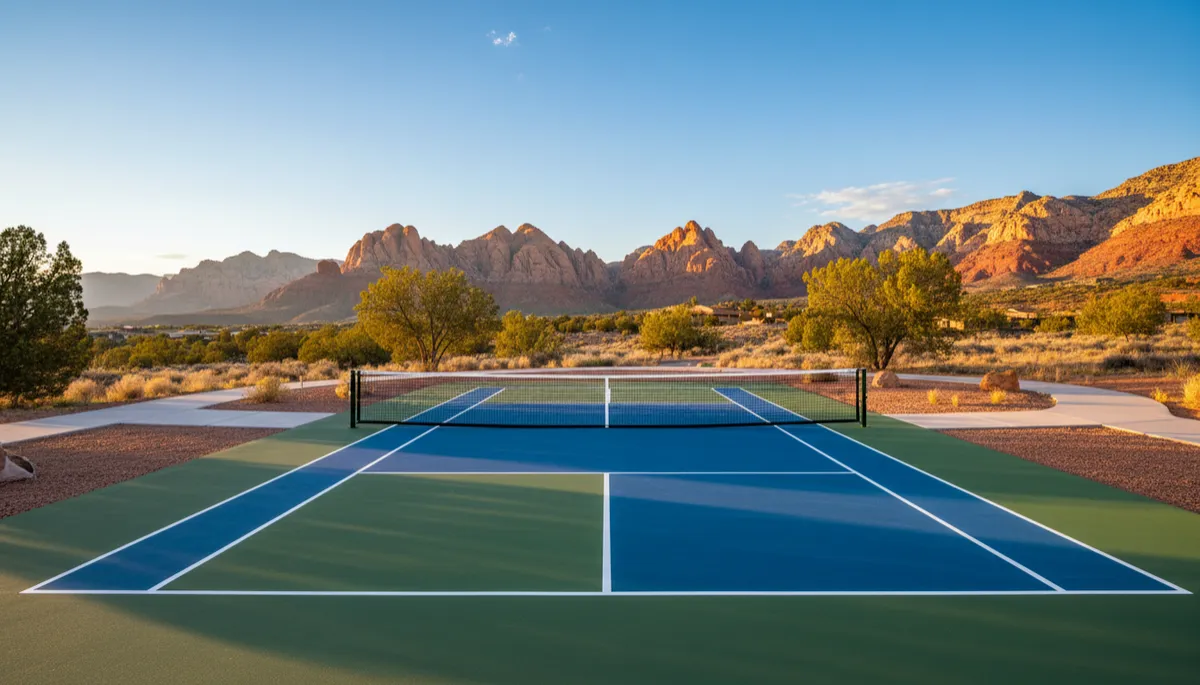
Build Your Pickleball Court in Southern Utah
Home Improvement, Pickleball Courts, Southern Utah
Full Pickleball Court Construction in Southern Utah: From Dirt to First Serve
If you live in Southern Utah and are dreaming of your own backyard pickleball court, you’re probably wondering what it really takes to go from empty space to a smooth, playable surface that meets official standards. This guide walks you through looking for full pickleball court construction start to finish in Southern Utah so you understand every step, cost driver, and local consideration before you commit to the project.
Step 1: Planning Your Southern Utah Pickleball Court
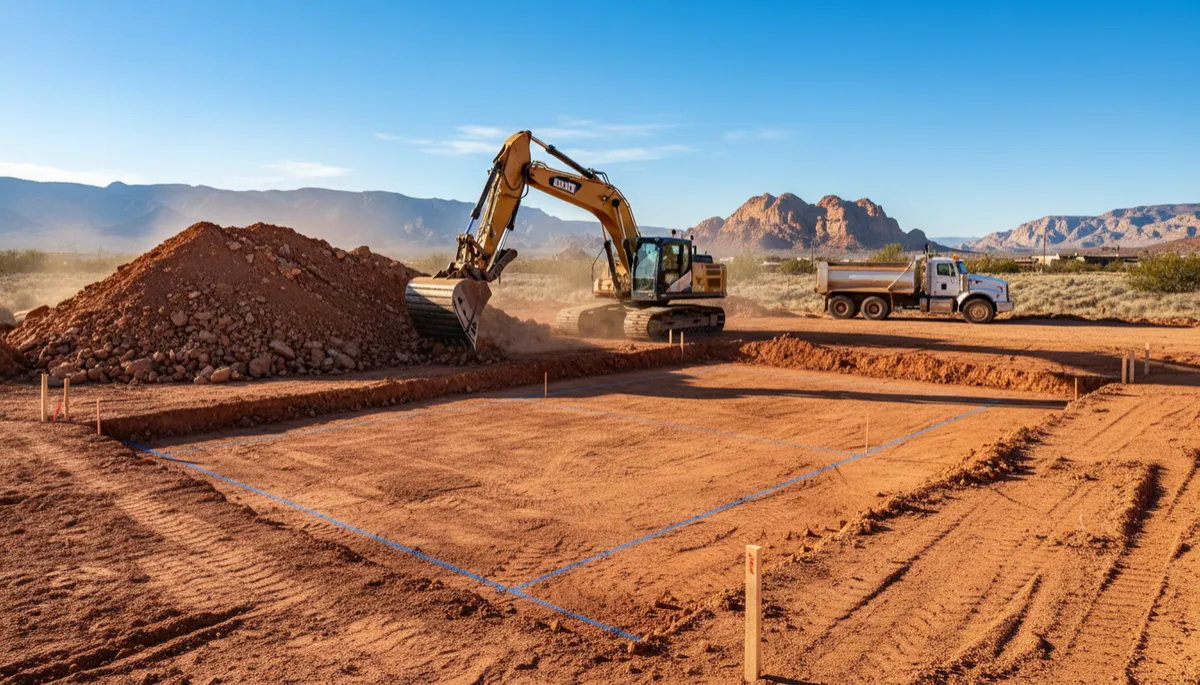
Before any dirt is moved, you’ll want a solid plan. That starts with confirming your available space. A standard pickleball court playing area is 20 feet wide by 44 feet long, but you should plan for a total pad of roughly 30 by 60 feet to allow room for run-off, fencing, and safe movement around the court. This fits comfortably in many Southern Utah backyards, small communities, or short-term rental properties looking to add a standout amenity.
Next, check local zoning and HOA rules. Some neighborhoods in Washington County, St. George, and surrounding areas may have restrictions on fencing height, lighting, or noise. It’s also smart to think about neighbors: placing the court farther from bedrooms and using windscreens can reduce sound and visual impact while still giving you a great play experience.
💡 Pro Tip: Whenever possible, orient your court north–south. This follows USA Pickleball recommendations and helps reduce sun glare during morning and evening play in Southern Utah’s bright desert light.
Step 2: Budgeting and Understanding Costs in 2026
For a standard outdoor court in Southern Utah in 2026, most homeowners can expect to invest between $25,000 and $40,000 for a quality build that includes a new slab, acrylic surfacing, fencing, and a permanent net system. Basic projects that reuse an existing concrete pad can sometimes come in closer to $10,000–$20,000, while premium courts with post-tension concrete, cushioned coatings, and LED lighting may reach $45,000–$60,000 or more, depending on finishes and site conditions.
Site preparation: grading, soil compaction, and drainage typically run $2,000–$10,000 depending on how rocky or uneven your lot is.
Concrete or asphalt slab: usually $10,000–$18,000 for standard concrete, more for post-tension systems designed to minimize cracking over time.
Acrylic sport coatings: expect $2,000–$5,000 for a professional, non-slip, UV-stable surface in classic green or blue with white lines.
Fencing and accessories: chain-link fencing, gates, net posts, and a regulation net often add $2,000–$6,000.
Permits, lighting, and small extras like windscreens or court benches can add several thousand dollars, so it’s wise to include a 10–15% contingency in your budget. Having a clear price range in mind will help you evaluate proposals confidently and prioritize what matters most—whether that’s premium surfacing, nighttime play, or simply getting a solid, long-lasting court at a fair price.
Step 3: Site Prep and Drainage for Desert Conditions
Southern Utah’s desert climate brings unique challenges: intense sun, big temperature swings, and occasional heavy downpours. Proper site preparation is crucial to keep your court from heaving, cracking, or pooling water. A professional crew will clear vegetation, remove soft or unstable soils, and grade the area so water flows away from the court, not toward your home or neighbor’s property.
A compacted gravel base is typically installed beneath the slab to help with drainage and stability. In some parts of Southern Utah, additional soil stabilization or deeper excavation may be recommended, especially if your lot sits on expansive or poorly compacted soil. Investing in this unseen work protects your court and keeps it safe and level for years of play.
Step 4: Pouring the Slab and Getting the Surface Right
Once the site is prepared, it’s time to pour the concrete or lay asphalt. For residential courts, a reinforced concrete slab is very common because it’s durable and pairs well with acrylic sport coatings. Your contractor will set forms to the correct dimensions—typically around 30 by 60 feet—then pour and finish the slab with a slight slope for drainage, usually about 1% (roughly one inch of fall for every eight feet).
After curing, the surface is cleaned and prepped for coatings. This is where a specialist like Ace Coatings South can make a major difference. High-quality acrylic systems are designed to handle UV exposure, heat, and everyday traffic while providing the right amount of texture for grip without being too abrasive on knees and elbows. You’ll choose your main court color, usually a neutral or classic sport tone, and contrasting colors for the non-volley zone and boundary lines.
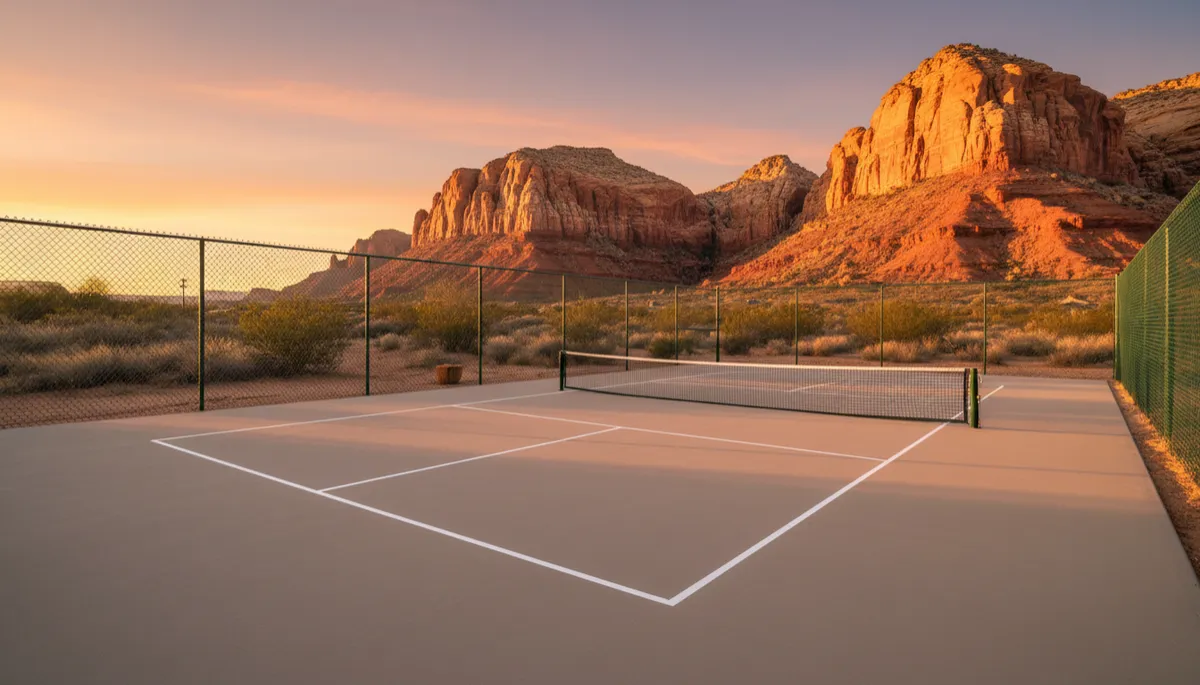
A professionally coated surface improves ball bounce, traction, and long-term durability in harsh desert sun.
Step 5: Court Layout, Lines, and Net Installation
With the surface in place, it’s time to mark and paint the playing lines. Official pickleball courts are 20 feet by 44 feet, with 2-inch-wide white lines. The non-volley zone—often called the “kitchen”—extends 7 feet from each side of the net. Accurate measurements matter here, especially if you want a court that feels the same as the public facilities you’re used to playing on around St. George, Hurricane, or Cedar City. Following USA Pickleball diagrams ensures you’re in line with national standards.
Permanent net posts are typically set in concrete footings at the center of each baseline. The regulation net height is 36 inches at the sidelines and 34 inches at the center. A quality net system is worth the investment—it will stay taut, resist sagging, and handle Southern Utah’s wind and temperature swings much better than a cheap portable net.
Step 6: Fencing, Lighting, and Player Comfort
Most homeowners choose chain-link fencing around at least the ends of the court, often 10–12 feet high, to keep balls contained and protect landscaping or windows. In windy parts of Southern Utah, adding windscreens can cut down on gusts and visual distractions, making games more enjoyable and slightly quieter for neighbors. Neutral colors like dark green or black blend in well with desert landscaping and red rock backdrops.
If you plan to play in the evenings, LED court lighting is a smart upgrade. Well-designed lighting focuses on the court surface while minimizing glare and light spill into nearby homes. Be sure to confirm any local restrictions on pole height or hours of operation before installing lights. Simple extras like a small seating area, shade structure, or water station can transform your court from a basic play space into a true backyard gathering spot.
Step 7: Maintenance in a Harsh, Sunny Climate
Once your court is complete, ongoing care is relatively simple—but important. In Southern Utah’s dusty environment, regular sweeping or blowing keeps sand and debris from acting like sandpaper on the surface. Rinsing with water occasionally helps maintain color and traction. Inspect your court a few times a year for small cracks, worn spots, or peeling lines so they can be addressed before they spread or become a tripping hazard.
High-quality acrylic coatings can last many years in desert conditions when applied correctly, but eventually they will need resurfacing. Planning for a resurfacing cycle every several years—depending on how heavily you play—keeps the court looking sharp and performing like new. Working with a local specialist who understands Southern Utah’s climate and soil conditions can help you choose coatings and colors that stand up best to heat, UV rays, and daily play.
Is a Backyard Pickleball Court Right for You?
For many Southern Utah homeowners, a private pickleball court becomes the heart of their property—somewhere friends gather after work, kids learn the game, and visiting family members look forward to playing under the desert sky. If you regularly drive to busy public courts or manage a vacation rental, the convenience and added value of your own court can more than justify the investment over time. It can also be a meaningful lifestyle upgrade, encouraging you to stay active without leaving home.
📌 Key Takeaway: The most successful projects start with clear goals—decide whether your priority is casual family fun, frequent competitive play, or boosting property appeal for guests or future buyers.
Bringing Your Southern Utah Pickleball Court to Life
From the first sketch to your first serve, building a pickleball court is a series of deliberate steps: planning, budgeting, site prep, slab work, surfacing, line layout, and finishing touches. When each phase is handled correctly—and with Southern Utah’s climate in mind—you end up with a court that looks beautiful, plays consistently, and holds up for years of daily use. Partnering with experienced local professionals, especially for the coating and surfacing stages, gives you peace of mind that your investment is protected and ready for countless games with family and friends.
Whether you’re just starting to research or you’re ready to break ground, understanding the full process helps you ask better questions, compare quotes fairly, and make confident decisions. With the right plan and team, your vision of a personal pickleball oasis in Southern Utah can move from idea to reality much sooner than you might think.
