


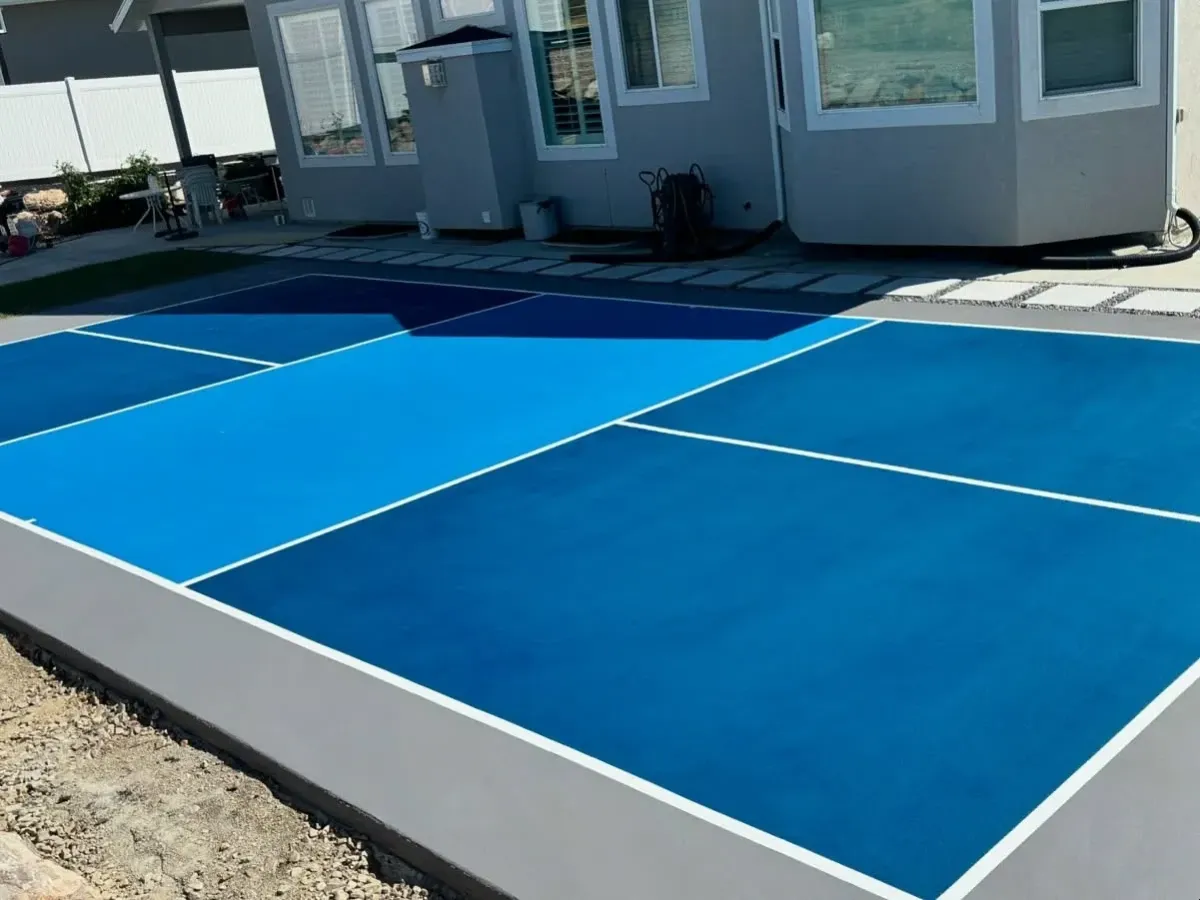
Installing a Backyard Pickleball Court: Space, Surface & Planning Guide
Installing a Backyard Pickleball Court can turn unused outdoor space into a practical place for exercise, family time, and casual competition. But a long-lasting court requires more than a net and painted lines. The best results come from careful planning, proper drainage, a stable base, and a surface system designed for safe movement and consistent play.
Backyard courts are especially appealing because they remove the wait times and scheduling challenges that often come with public parks. They also give homeowners more control over court colors, lighting, fencing, and comfort features. Still, every property has different limits, so the project should begin with space, soil, slope, and local rules.
Ace Coatings South looks at backyard court projects as complete sport-surface installations. The layout, foundation, coatings, and accessories all need to work together if the court is expected to stay playable through changing weather, frequent use, and normal surface wear.
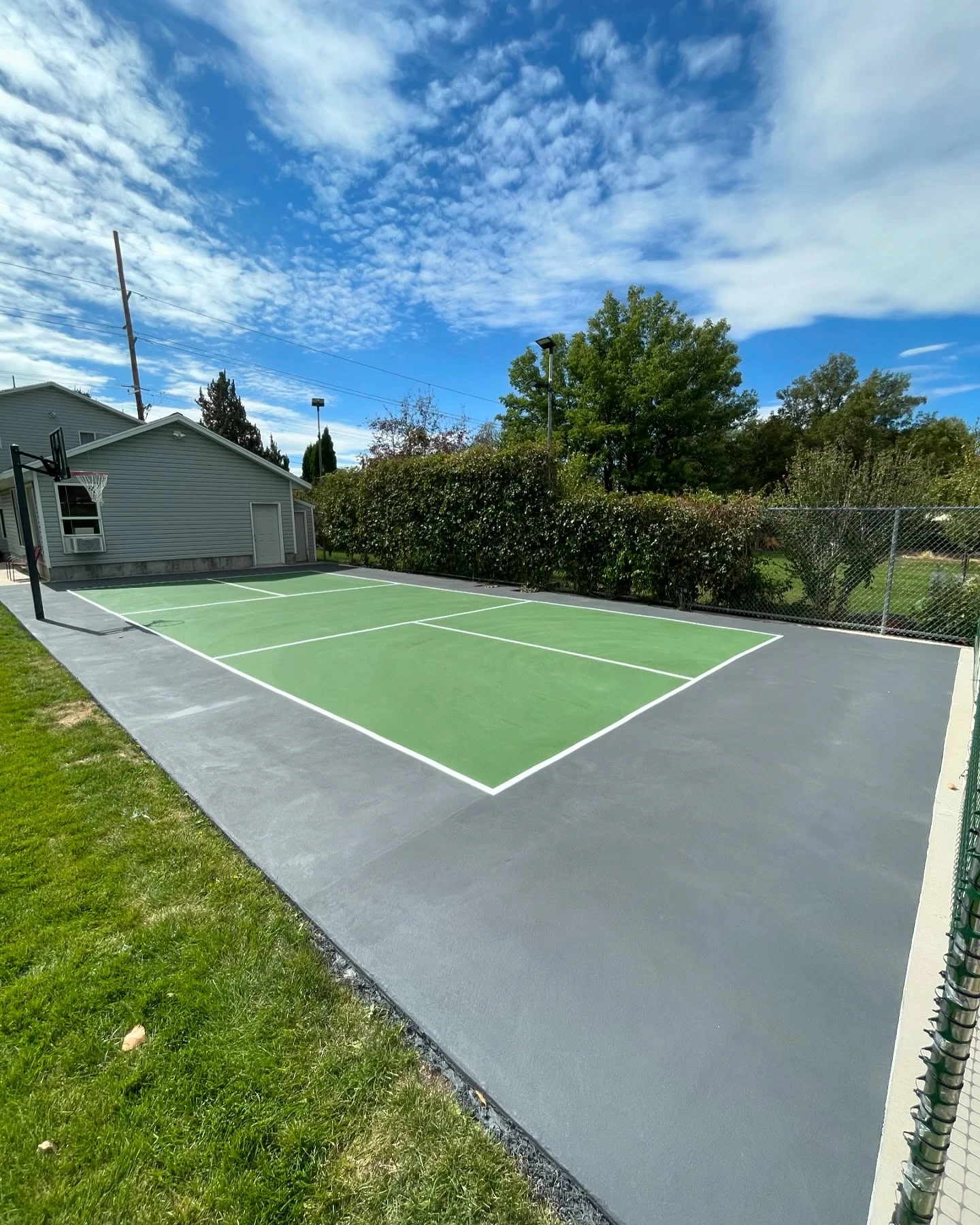
Planning Installing a Backyard Pickleball Court for the Right Space
The striped playing area for a regulation pickleball court measures 20 feet wide by 44 feet long, but that is not enough space for safe play. Players need room outside the lines to chase deep serves, recover after wide shots, and move without running into fencing, walls, patios, or landscaping.
A common minimum court area is about 30 feet by 60 feet. This allows for safer overrun space around the playing lines. For a more comfortable backyard court, especially if competitive games are expected, extra space is even better.
Important spacing details include:
Kitchen area: 7 feet from the net on both sides
Side clearance: Room beyond each sideline for lateral movement
Baseline clearance: Extra space behind each baseline for returns and serves
Fence distance: Enough separation to reduce collision risk
Access paths: Safe entry and exit points around the court
Before committing to a layout, walk the site and imagine real movement during a point. Pickleball includes fast stops, side steps, short sprints, and quick recovery. A court that technically fits but feels cramped may not be enjoyable or safe.
Measuring Before Installing a Backyard Pickleball Court
The first practical step is to mark the proposed court area with stakes, string, chalk, or marking paint. This makes the footprint easier to understand in real life. It also helps identify conflicts that may not be obvious on a drawing.
Check for:
Utility easements
Septic systems
Irrigation lines
Drainage paths
Tree roots
Sloped areas
Retaining walls
Property line setbacks
HOA restrictions
Buried utilities and drainage systems should be located before excavation begins. Building over the wrong area can create costly problems later. If the yard cannot fit a full-size court, alternatives may include a practice court, a half-court drilling area, or a multi-use slab with portable equipment.
Local approvals should also be reviewed early. Depending on the property, rules may apply to hardscape coverage, stormwater runoff, fence height, lighting, and noise. In HOA communities, color choices, fencing materials, and lighting placement may also need approval.
Building Installing a Backyard Pickleball Court on a Strong Foundation
A pickleball court is only as reliable as the base beneath it. If the ground shifts, drains poorly, or is not compacted correctly, the surface can crack, settle, or develop low spots where water collects.
Site preparation usually begins with removing grass, roots, topsoil, and loose material. The area is then graded and compacted to create a stable subgrade. A layer of compacted crushed stone or aggregate is often installed above the soil to support the slab and improve stability.
The court must also be sloped correctly. A court can look flat while still having a subtle slope that allows water to move off the surface. This is important because standing water can create slippery play conditions, stain the surface, and shorten the life of the coating system.
For the base, homeowners commonly compare asphalt and concrete. Asphalt may cost less upfront, but concrete often provides a stronger long-term foundation for residential courts. In some locations, post-tensioned concrete may be considered for added crack control, especially where soils are less stable.
Surface Options for Installing a Backyard Pickleball Court
Once the base is built, the playing surface determines how the court feels. Raw concrete is not ideal for pickleball because it can be too harsh, too slick, and too inconsistent for regular athletic use. A sport-specific finish is needed for traction, comfort, and ball response.
The most common backyard surface options include:
Acrylic sport coatings: Durable, colorful, and designed for outdoor court play
Cushioned acrylic systems: Adds rubberized layers to reduce impact on joints
Modular court tiles: Interlocking tiles that provide drainage and shock absorption
Multi-use coatings: Useful when the space will serve more than one purpose
Acrylic systems are popular because they create a clean, professional-looking court with reliable bounce. Fine texture is added to the coating to improve grip and reduce slipping. The amount and consistency of that texture matter. Too little grip can feel unsafe, while too much texture can make the surface abrasive.
Cushioned systems are often worth considering for families, older players, or anyone planning frequent play. These systems can reduce stress on knees, ankles, hips, and lower backs while maintaining good ball performance.
Modular tiles may be useful when fast installation, drainage, or added comfort is a priority. They can also work well over certain existing slabs, provided the base is stable and properly prepared.
For court dimensions, line placement, and equipment rules, homeowners should refer to USA Pickleball standards before finalizing the layout.
Finishing Installing a Backyard Pickleball Court With Smart Details
The finishing details make a major difference in how the court looks, plays, and fits into the neighborhood. Net systems, fencing, lighting, and noise planning should not be treated as afterthoughts.
For dedicated backyard courts, permanent net posts usually provide the best playing experience. They keep the net stable, properly tensioned, and ready for regular use. Portable nets are better for shared spaces where the slab may also be used for basketball, gatherings, or general outdoor activity.
A regulation pickleball net is 36 inches high at the sidelines and 34 inches high at the center. Accurate net height matters because even small differences can affect shot behavior and gameplay.
Fencing helps contain balls and defines the court area. Many backyard courts use taller fencing behind the baselines and lower fencing along the sides, depending on the property layout and desired appearance. Windscreens can add privacy, improve ball visibility, and help manage wind.
Lighting should be planned carefully. The goal is to illuminate the court evenly without creating glare or spilling light into neighboring homes. Side-mounted fixtures often work better than lights placed directly behind the baseline, where they can interfere with overhead shots.
Noise is another important consideration. Pickleball has a sharper sound than tennis because of paddle and plastic ball contact. Thoughtful court placement, acoustic fence materials, landscaping, and respectful playing hours can help reduce neighborhood concerns.
Budgeting and Maintaining Installing a Backyard Pickleball Court
The cost of a backyard pickleball court depends on the size, site conditions, base material, surfacing system, fencing, lighting, drainage, and equipment. A simple conversion of an existing slab may be relatively modest, while a new court with excavation, concrete, surfacing, fencing, and lights requires a larger budget.
Common cost factors include:
Site clearing and grading
Soil preparation and compaction
Concrete or asphalt base installation
Drainage improvements
Acrylic or cushioned surfacing
Court striping
Permanent or portable net systems
Fencing and gates
Lighting
Noise-control features
Maintenance should begin as soon as the court is finished. Regular sweeping keeps dirt, leaves, and debris from staining the surface or trapping moisture. Occasional washing with mild cleaner helps preserve traction and appearance. Harsh chemicals and aggressive pressure washing should be avoided because they can damage the coating texture.
Inspect the court after heavy rain. If water remains in low spots, those areas may need professional attention. Small cracks, fading, or texture loss should be addressed early before they become larger issues.
Ace Coatings South helps homeowners understand whether their space is better suited for a new build, a resurfacing project, or a modified court layout. That guidance can prevent overspending and help match the court design to the way it will actually be used.
A backyard pickleball court can add real enjoyment to a property when it is planned and built correctly. The strongest projects start with accurate measurements, responsible site preparation, durable surfacing, and practical details that support everyday play. With the right approach, the court can become a reliable place for exercise, connection, and years of home-court advantage.
Contact Ace Coatings South to discuss your court plans, ask questions about surface options, or schedule a site review. Their team can help you understand what your space needs and recommend practical next steps based on your goals, budget, and playing conditions.
