


Modular Tile vs. Concrete Pickleball Court: Cost, Comfort & Performance Guide
If you're planning to build a court at home, for a club, or for a community facility, understanding the difference in a Modular Tile vs. Concrete Pickleball Court decision is critical. The surface you choose affects comfort, performance, maintenance costs, installation timeline, and long-term durability. While both options can deliver high-quality play, they function very differently beneath your feet.
Many players assume pickleball is always played on painted concrete—but modern surfacing systems have expanded your options. This guide provides a professional, experience-backed breakdown to help you choose the right foundation based on performance goals, climate, budget, and player comfort.
Industry professionals, including teams like Ace Coatings South, evaluate each project individually—because soil conditions, drainage, player demographics, and long-term goals all influence the best surface choice.
Let’s examine the facts.
Modular Tile vs. Concrete Pickleball Court: Structural Differences Explained
At a glance, both surfaces may look similar once striped and painted—but their construction systems are completely different.
What Is a Concrete Court?
A traditional concrete pickleball court consists of:
Excavated and compacted sub-base
Reinforced concrete slab
Acrylic resurfacer layers
Textured color coats
Line striping
This creates a seamless, bonded playing surface. Concrete is rigid, stable, and widely used for permanent sport installations.
According to USA Pickleball, proper slope (typically 1% for drainage), consistent surface texture, and uniform bounce are essential for quality play. Concrete courts meet these standards when installed correctly and professionally finished.
However, concrete is unforgiving—every movement impact is returned directly to the player.
What Is a Modular Tile Court?
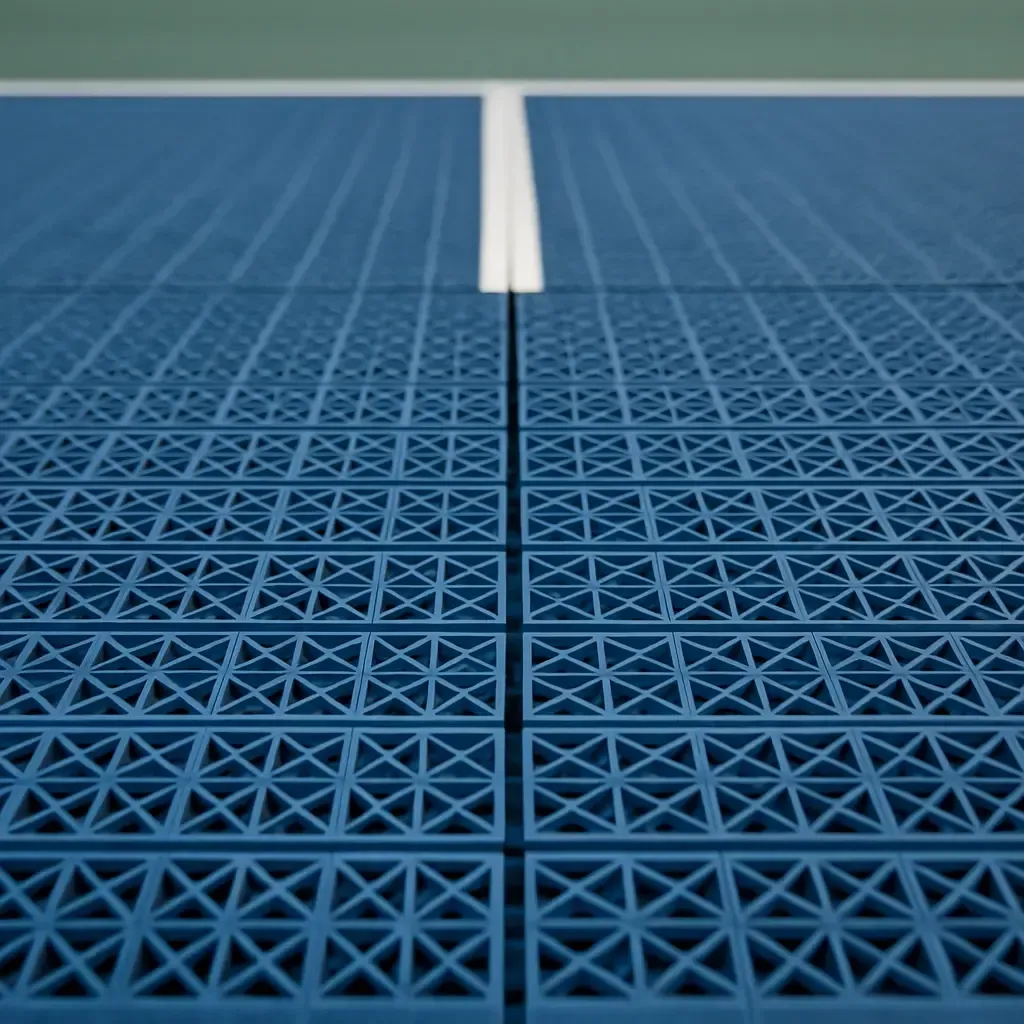
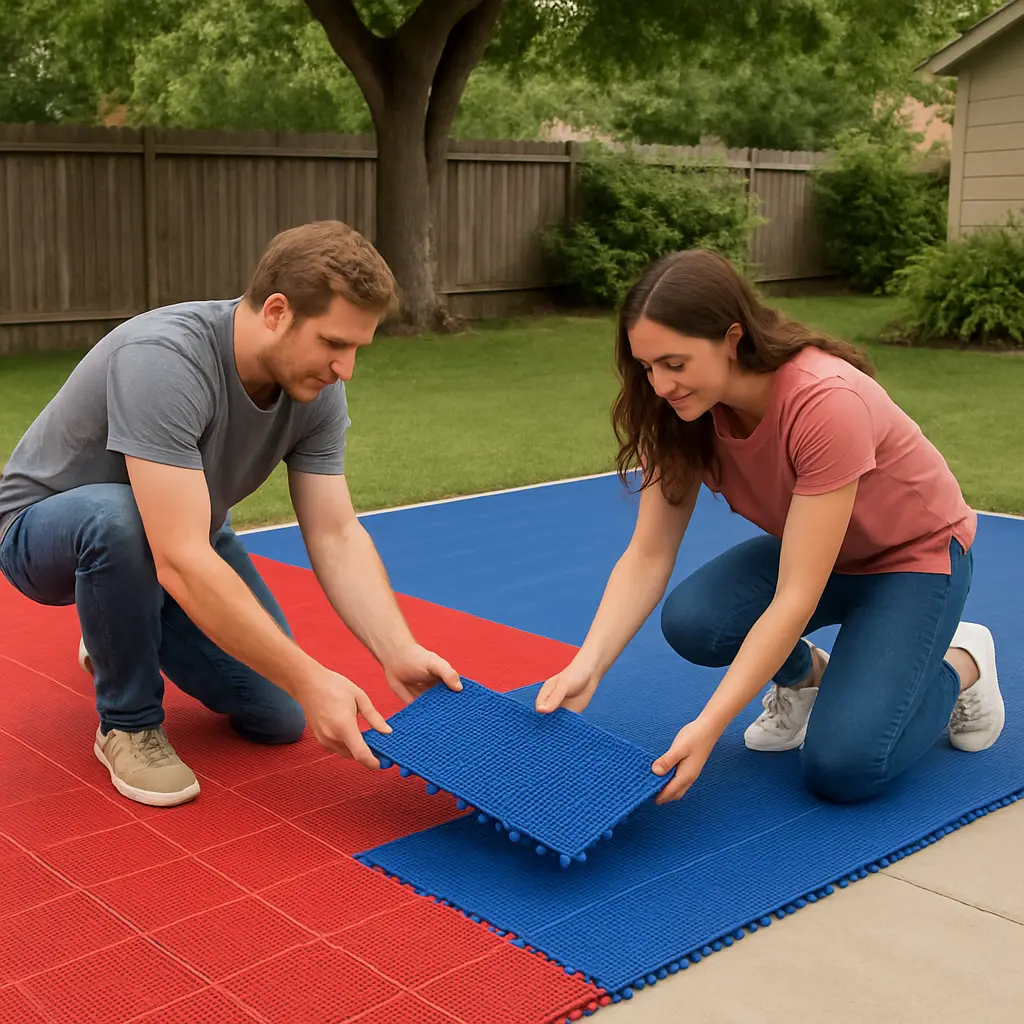
Modular tile courts use interlocking polypropylene tiles installed over a stable base (usually concrete or asphalt).
Key characteristics:
Individual snap-together panels
Perforated tops for drainage
Suspended design with slight vertical flex
Replaceable components
Unlike bonded acrylic surfaces, modular tiles “float” on top of the base. The slight air gap beneath each tile allows minimal flex under pressure.
This structural difference drives performance, comfort, and maintenance distinctions.
Player Comfort and Performance
Comfort and gameplay feel are often the deciding factors.
Modular Tile vs. Concrete Pickleball Court: Impact on Joint Health
Concrete surfaces are fully rigid. During play:
Quick pivots
Split-steps
Lunges
Hard stops
All transfer impact directly back into the knees, ankles, hips, and lower back.
For younger players, this may not be noticeable. But over time, repetitive stress can lead to fatigue and joint soreness.
Modular tiles, by contrast, provide:
Built-in vertical deflection
Partial shock absorption
Reduced cumulative stress
This makes tile systems appealing for recreational facilities and senior-heavy communities.
Installers like Ace Coatings South often recommend modular systems when long-term player comfort is a primary concern, especially in high-frequency use environments.
Ball Bounce and Game Speed
Concrete courts:
Deliver fast, crisp bounce
Return maximum ball energy
Create a tournament-style pace
Aggressive players who rely on drives and quick exchanges often prefer this traditional hard-court feel.
Modular tile courts:
Slightly absorb ball energy
Produce marginally slower rebound speed
Offer slightly extended reaction time
The bounce height remains consistent, but overall pace can feel subtly moderated.
Neither is objectively better—it depends on playing style.
Modular Tile vs. Concrete Pickleball Court: Installation and Long-Term Costs
Beyond performance, cost and maintenance matter significantly.
Installation Differences
Concrete Court Installation:
Excavation and grading
Compacted aggregate base
Formwork and reinforcement
Concrete pour and curing (weeks before surfacing)
Professional acrylic application
This is a permanent construction project requiring experienced contractors.
Modular Tile Installation:
Requires stable base (existing slab or new concrete)
Tiles snap together without adhesives
Installation often completed in a day
Immediate playability
If an existing slab is available, modular tiles can significantly reduce installation complexity.
However, if starting from bare ground, you’ll still need a proper base—meaning the cost difference narrows.
Maintenance and Repair
Concrete Courts Require:
Crack repair as needed
Full resurfacing every 5–7 years
Professional re-coating of acrylic system
Resurfacing can cost several thousand dollars per cycle.
Modular Tile Courts Offer:
Easy replacement of individual damaged tiles
No scheduled resurfacing cycles
Excellent drainage (playable soon after rain)
Instead of large periodic costs, tile systems typically incur small, occasional part replacements.
Over 10–15 years, this difference can significantly impact total ownership cost.
Climate and Drainage Considerations
Environmental conditions influence surface longevity.
Concrete:
Can crack from freeze-thaw cycles
Slower to dry after rainfall
May require squeegeeing
Modular Tiles:
Allow water to drain through immediately
Often playable within 20–30 minutes after rain
Can bridge minor slab imperfections
In areas with heavy rainfall, drainage alone can make modular tiles attractive.
In hotter climates, both surfaces perform well when installed over properly prepared sub-bases.
Quick Comparison Snapshot
Choose Concrete If:
You want tournament-style speed
Permanent installation is your priority
Budget allows for professional construction
You prefer traditional hard-court performance
Choose Modular Tiles If:
Joint comfort matters most
You want easy maintenance
Fast drainage is important
You have an existing slab to build upon
Final Thoughts: Which Surface Fits Your Goals?
The Modular Tile vs. Concrete Pickleball Court decision isn’t about right or wrong—it’s about aligning your priorities with performance expectations.
Concrete offers:
Classic competitive feel
Long structural lifespan
Professional aesthetic
Modular tiles provide:
Increased comfort
Simplified maintenance
Superior drainage
Replaceable components
Before committing, evaluate:
Player age demographics
Budget (initial and long-term)
Climate
Desired play style
Existing site conditions
If you’re considering a new pickleball court installation and want expert insight tailored to your location and usage goals, professional evaluation makes a difference.
Contact us at Ace Coatings South to schedule a consultation and receive a detailed surface recommendation for your project. Let’s build a court designed for performance, durability, and years of enjoyable play.
