


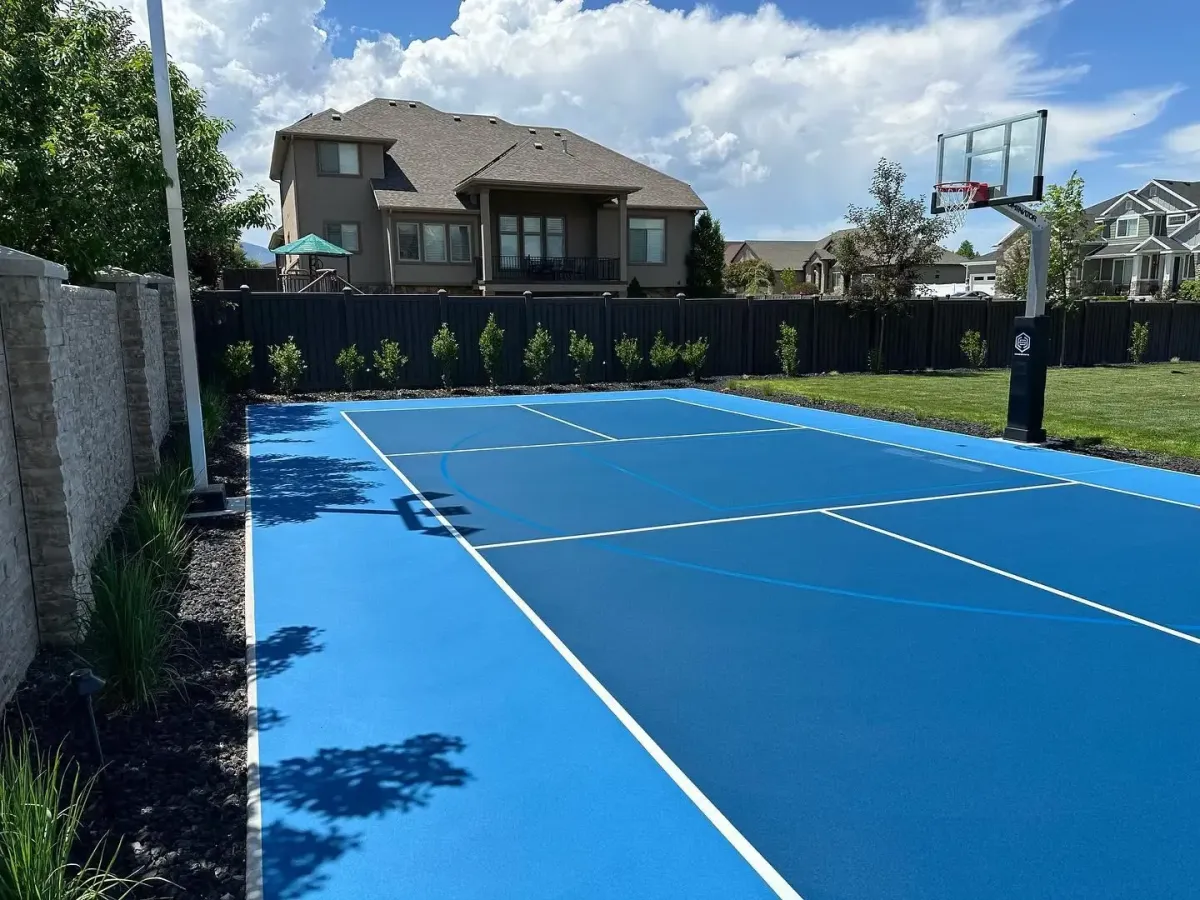
Finding the Right Pickleball Court Builder in South Utah
Searching for a pickleball court builder near me in South Utah usually starts with a simple goal: create a reliable place to play at home, at a community space, or on a private recreational property. But a quality pickleball court is not just a painted slab with a net. It is a carefully planned sports surface that needs the right dimensions, drainage, base construction, coating system, equipment, and maintenance plan.
Southern Utah creates unique construction challenges. Intense sun, high UV exposure, dry heat, occasional freeze-thaw cycles, and sudden storm runoff can all affect how an outdoor court performs over time. A court that is not properly graded, surfaced, or sealed may look good at first but can develop fading, cracking, puddling, or unsafe slick spots sooner than expected.
A dependable court should feel consistent underfoot, drain quickly after weather, provide reliable traction, and support safe play for players of different ages and skill levels. Whether the project is a dedicated backyard court, a multi-sport family space, or a small community amenity, the best results come from careful planning before construction begins.
Ace Coatings South helps property owners approach court construction as a long-term investment rather than a quick backyard upgrade. That means evaluating the site, choosing climate-appropriate materials, and building the court around how it will actually be used.
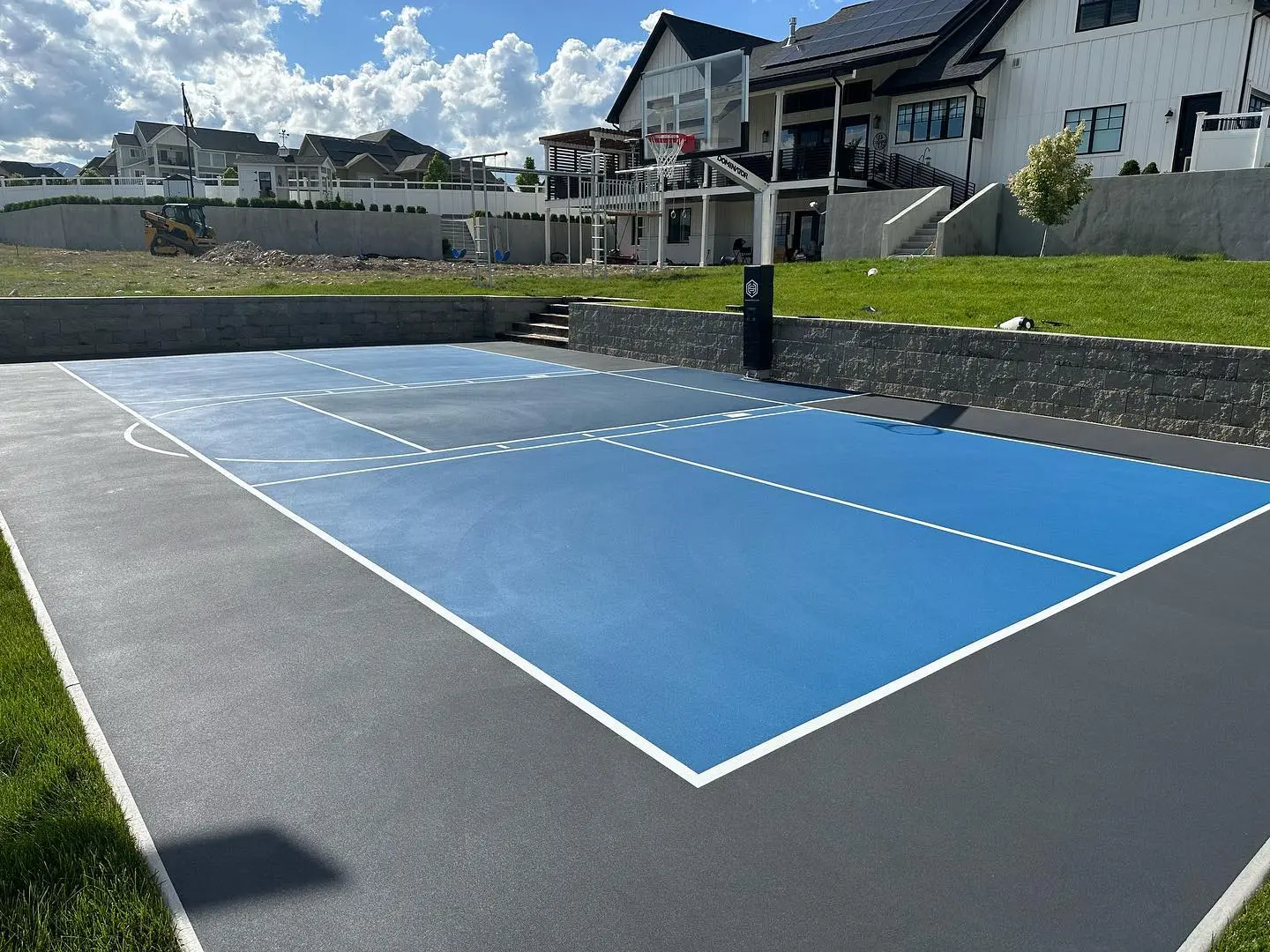
Why a pickleball court builder near me in South Utah starts with planning
The first step in building a court is understanding the property. Before selecting colors, nets, or accessories, the site should be evaluated for space, slope, drainage, soil stability, access, sunlight, and local requirements. These early details influence the final budget and the long-term success of the court.
A regulation pickleball court playing area measures 20 feet wide by 44 feet long. However, that is only the lined playing surface. A permanent court should include additional space outside the lines so players can serve, move, recover, and chase balls safely. Many residential courts are planned around a total pad size of about 30 feet by 60 feet, while more competitive layouts may require additional clearance.
Planning also includes local rules. Depending on the city, county, HOA, or neighborhood, a project may need approval for setbacks, drainage changes, lighting, fencing, noise control, or hardscape coverage. Addressing these details early helps prevent delays and avoids costly redesigns after construction has already started.
A strong planning process should answer questions such as:
Is there enough space for both the court and safe run-off areas?
Does the property naturally slope toward or away from the court?
Will the court need fencing, lighting, or retaining support?
Are there nearby neighbors who may be affected by sound or lights?
Can construction equipment access the site?
Will the court be dedicated to pickleball or designed for multiple sports?
Are permits, HOA approvals, or setback reviews required?
The best court designs balance performance, safety, budget, and property fit. A court that is squeezed too tightly into a space may be playable, but it may not feel comfortable or safe during real games.
How a pickleball court builder near me in South Utah evaluates the site
A proper site evaluation looks below the surface. The base beneath the court is one of the most important parts of the project because it determines how well the finished surface resists movement, cracking, and drainage problems.
Southern Utah properties can vary widely. Some sites are flat and open. Others include slope, compacted soils, rocky areas, landscaping limitations, or drainage patterns that need to be corrected. Even a small grade issue can create water flow problems if the court is not designed correctly.
Drainage is especially important. A pickleball court should never be perfectly flat. It needs a subtle, consistent slope that moves water off the surface without interfering with play. If water collects in low spots, it can create staining, slick areas, coating wear, and long-term base damage.
A contractor should evaluate:
Existing grade and water flow
Soil stability and compaction needs
Excavation or fill requirements
Base material thickness
Edge support and court borders
Runoff paths during storms
Future landscaping or irrigation conflicts
Good site planning may not be the most visible part of the project, but it protects everything built above it.
How a pickleball court builder near me in South Utah chooses the right surface
Once the site is planned, the next major decision is the base and surface system. Most permanent outdoor courts are built over concrete or asphalt. Each option has advantages, but the choice should be based on climate, budget, expected use, and maintenance goals.
Concrete often costs more upfront but can provide excellent long-term stability when properly reinforced and installed. In areas with temperature swings, reinforcement, control joints, and proper curing matter. Asphalt may be more affordable initially and can be suitable for some projects, but it may require more maintenance as it ages, especially under heat and UV exposure.
The finished playing surface is usually an acrylic sport coating system. Acrylic coatings provide color, traction, and consistent ball response. They also allow for custom color combinations and crisp court striping. For outdoor courts in South Utah, UV-resistant materials are important because strong sun can fade lower-quality coatings more quickly.
Surface color should also be considered carefully. Dark colors can absorb more heat, while lighter color combinations may help the court feel more comfortable during warm-weather play. A textured finish is essential because players need secure footing for quick lateral movement, short stops, and controlled kitchen play.
Cushioned acrylic systems are another option. These include additional layers designed to reduce impact on joints. For homeowners, active adult communities, or players who expect frequent use, a cushioned system may improve comfort without sacrificing the consistent bounce expected from a hard court.
For layout, USA Pickleball guidelines are commonly used for official court dimensions and play standards. However, an experienced builder also considers run-off space, fencing distance, net placement, line visibility, slope, and how the court will function during everyday use.
Why a pickleball court builder near me in South Utah compares concrete, asphalt, and coatings
The best surface system starts with the right base. A premium coating cannot make up for a poorly prepared foundation. If the base shifts, cracks, holds water, or has low spots, the finished court will eventually show those weaknesses.
Concrete is often chosen for residential courts when long-term durability is the priority. It can be reinforced, finished smoothly, and coated with an acrylic system after proper curing. Asphalt can work well in certain applications, but it should be installed with the correct thickness, compaction, and drainage planning.
When comparing options, property owners should ask:
Which base is best for this specific site?
How will the surface handle heat and UV exposure?
What type of acrylic system is recommended?
Is a cushioned surface worth the added cost?
How will cracks or expansion joints be handled?
How often should the court be resurfaced?
What maintenance will be required after installation?
Ace Coatings South can help property owners understand these choices in practical terms, including how each option affects comfort, appearance, lifespan, and long-term maintenance.
What a pickleball court builder near me in South Utah includes beyond the lines
A complete pickleball court includes more than the playing surface. Accessories and surrounding features can strongly influence comfort, safety, and usability.
A permanent net system is one of the most important upgrades. In-ground posts and a quality net provide a more stable, professional playing experience than a portable setup. Proper net height, tension, and placement help preserve the feel of the game.
Fencing is another major consideration. It keeps balls contained, protects nearby landscaping, and creates a more defined recreational space. For residential properties, fencing height, visibility, and placement should be planned with both playability and neighborhood appearance in mind.
Lighting can extend court use into early morning or evening hours, which is especially helpful during hot months. However, lighting should be designed carefully. Low-glare LED fixtures, proper pole placement, and downward-directed illumination can help reduce light spill into neighboring properties.
Sound should also be considered. Pickleball has a distinct impact sound, and residential courts should be planned thoughtfully when neighbors are nearby. Fencing, landscaping, sound-dampening materials, court placement, and reasonable play hours can all help reduce potential concerns.
Other useful features may include:
Windscreens for comfort and privacy
Seating or shaded rest areas
Walkways around the court
Ball containment netting
Multi-sport striping
Equipment storage
Custom colors or logos
Padding near posts or fencing
A dedicated pickleball court may be best for players who want the cleanest playing experience. A multi-sport layout may be better for families who want basketball, short-court tennis, or other activities in the same space. The right choice depends on who will use the court most often.
How a pickleball court builder near me in South Utah supports long-term maintenance
Even a well-built court needs basic care. Regular maintenance protects the surface, preserves traction, and extends the time between professional resurfacing.
Outdoor courts should be kept free of dirt, leaves, small rocks, and organic debris. Debris can hold moisture, create stains, and make the court slippery. A soft broom, leaf blower, and occasional rinse with clean water are usually enough for routine upkeep.
Avoid aggressive pressure washing, harsh chemicals, metal shovels, or dragging heavy equipment across the surface. These can damage the acrylic coating and shorten the life of the court. Irrigation should also be directed away from the playing surface whenever possible because repeated water exposure can contribute to staining and surface wear.
Seasonal inspections are helpful, especially before and after winter. Property owners should look for cracks, low spots, edge movement, fading, worn texture, or areas where water drains slowly. Small issues are usually easier and less expensive to correct early.
Maintenance planning should include:
Weekly debris removal
Periodic rinsing
Stain cleaning with mild detergent
Seasonal crack checks
Drainage inspections after storms
Resurfacing when grip or color begins to wear
Keeping bikes, skateboards, and heavy equipment off the court
A quality pickleball court adds more than recreation. It creates a place for fitness, family time, neighborhood play, and long-term outdoor enjoyment. But the court performs best when it is planned for the property, the climate, and the people who will use it.
Ace Coatings South brings a sports-surface-focused approach to each project by helping property owners connect design decisions with real-world performance, maintenance, and long-term value.
