

Pickleball Court Resurfacing Guide for Homeowners
Home Improvement, Pickleball Court Resurfacing
Pickleball Court Resurfacing Near Me: A Homeowner’s Complete Guide
If you’ve been searching for "looking for pickleball court resurfacing near me", you’re probably noticing cracks, fading color, or a slippery surface on your court. Resurfacing isn’t just about looks; it’s about safety, playability, and protecting the investment you’ve made in your home or community space. In this guide, you’ll learn when to resurface, what the process involves, how long it takes, and why partnering with trusted specialists like Ace Coatings South can give you a court that feels brand new again.
Why Pickleball Court Resurfacing Matters for Everyday Players
A pickleball court might look simple at first glance, but the surface is doing a lot of work. It needs to grip your shoes, respond consistently to the ball, drain water efficiently, and stand up to sun, rain, and temperature swings. Over time, even a well-built court will show signs of wear that regular cleaning can’t fix.
Resurfacing restores the texture, color, and performance of your court without the cost and disruption of a full rebuild. For homeowners, HOAs, and small communities, it’s usually the smartest way to extend the life of an existing court while making it safer and more enjoyable for players of all ages.
Signs Your Pickleball Court Is Ready for Resurfacing
Not sure if your court needs a simple touch-up or a full resurfacing? Walk the court slowly and look for the following warning signs. The more of these you notice, the sooner you should schedule a professional evaluation.
Visible cracks: Hairline cracks can spread quickly, especially with freeze–thaw cycles. Larger cracks are both a tripping hazard and a sign the surface is breaking down.
Faded or patchy color: UV exposure slowly bleaches the surface, making the court look tired and reducing contrast between in-bounds and out-of-bounds areas.
Slippery spots: Smooth, polished areas where shoes don’t grip well are a major safety concern, especially after rain or early in the morning when there’s dew.
Puddling water: Standing water after a storm means the surface has low spots or drainage issues, which speed up deterioration and can lead to algae growth.
Uneven bounce: If the ball behaves unpredictably in certain areas, the surface may be worn, hollow, or separating from the base below.
💡 Pro Tip: Take photos of problem areas in good daylight. When you meet with a resurfacing specialist, these pictures help them understand how your court has aged and where to focus repairs.
What a Professional Pickleball Court Resurfacing Process Looks Like
Understanding the resurfacing process can give you confidence when choosing a contractor and evaluating quotes. While every project is unique, most quality resurfacing jobs follow a clear sequence of steps from inspection to final line striping.
1. On-Site Inspection and Planning
A trusted team will start with a thorough walk-through of your court. They’ll check for structural issues, drainage problems, and existing coatings. This is also when you’ll discuss color choices, line layouts, and any upgrades like additional courts, blended lines for multi-sport use, or accessibility considerations for older players.
2. Surface Cleaning and Preparation
Preparation is where long-lasting resurfacing jobs are won or lost. The court is typically pressure washed to remove dirt, mildew, and loose material. Oils, rust stains, and chalk residue are treated so new coatings can bond properly. Any vegetation growing through cracks is removed, and the areas are cleaned down to a solid base.
3. Crack Repair and Patching
Cracks and low spots are filled with specialized repair materials designed to flex with temperature changes and court movement. This step is crucial to prevent new coatings from simply mirroring old damage. For heavily worn courts, multiple layers of patching and leveling may be needed to restore a smooth, consistent playing surface.
4. Application of Resurfacing Coatings
Once repairs cure, technicians apply multiple coats of acrylic or specialty sport surfacing material. These coatings are engineered to provide the right balance of traction, ball response, and durability. Neutral, modern color schemes—like muted greens, grays, and blues—are popular for blending with surrounding landscaping while still offering clear contrast between court zones.
5. Precision Line Striping and Curing Time
After the main color coats have dried, pickleball lines are measured, taped, and painted with high-visibility, sport-grade striping paint. Accurate lines are essential for fair play and for following layout recommendations from organizations like USA Pickleball. Once finished, the court needs a short curing period—usually a couple of days—before you can return to regular play.
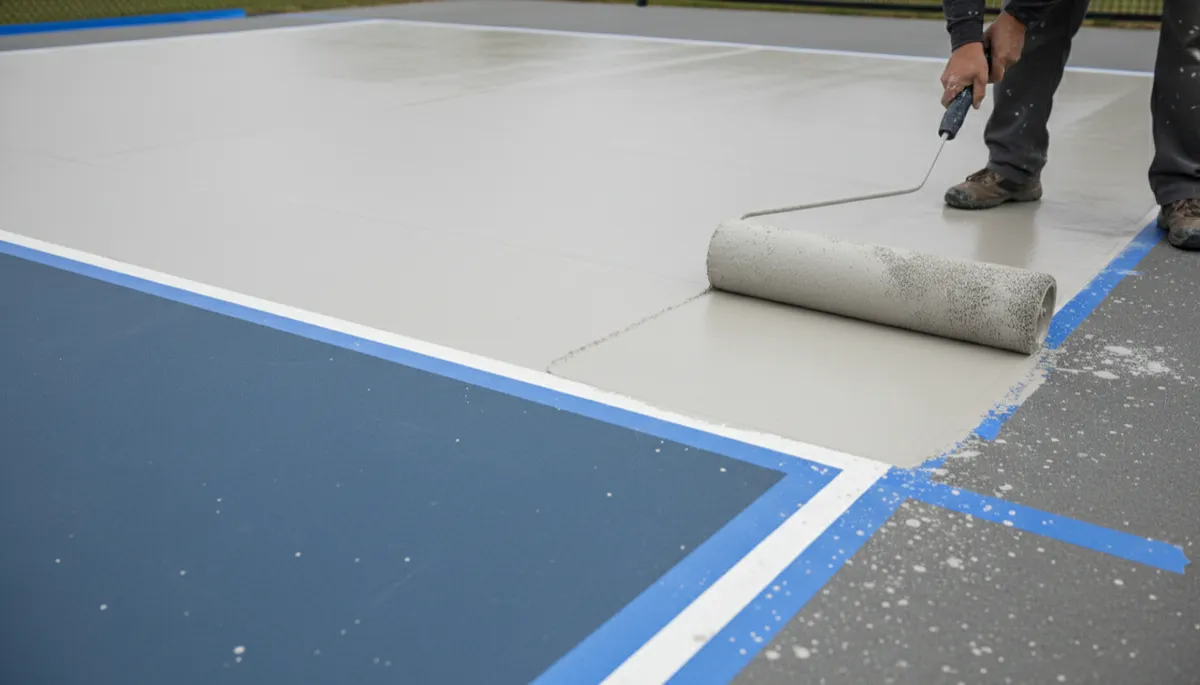
Careful surface preparation and coating application are key to a long-lasting pickleball court.
How Often Should a Pickleball Court Be Resurfaced?
There’s no single answer that fits every court, but most outdoor pickleball courts benefit from resurfacing every 4–8 years. The exact timing depends on how often you play, your local climate, and how well the court is maintained between projects. Heavy sunlight, frequent freeze–thaw cycles, and standing water will all accelerate wear and tear.
Regular cleaning, prompt crack repairs, and keeping leaves and debris off the surface can stretch the time between resurfacings. Think of it like changing the oil in your car: small, consistent care keeps bigger problems from developing and protects your original investment in the court base and fencing.
Budgeting for Resurfacing: What Homeowners Should Expect
Cost is often the first question homeowners ask, and it’s an important one. While prices vary by region and court condition, resurfacing is almost always significantly more affordable than tearing out and rebuilding a court from scratch. Factors that influence your final price include:
The size and number of courts you’re resurfacing
The extent of crack repair, patching, and leveling required
Choice of coating system and any performance upgrades
Site access, drainage improvements, and local weather considerations
When comparing quotes, look beyond the bottom-line number. Ask what’s included, how many coats will be applied, what kind of repair materials will be used, and how long the contractor expects the resurfaced court to last with normal use. A slightly higher upfront investment in quality materials and careful prep can save you from needing another resurfacing much sooner than expected.
Choosing a Resurfacing Partner You Can Trust
Because resurfacing is something you might only do once every several years, it’s worth taking the time to choose a partner with a strong track record. Look for a company that focuses on sport surfaces, understands pickleball-specific requirements, and is familiar with the best practices and layout standards promoted by national organizations. Experience with local climate conditions is also a major advantage, because your court needs to stand up to the exact mix of heat, humidity, rain, or cold where you live.
Ace Coatings South specializes in high-performance coatings for pickleball courts and other sport surfaces, with an emphasis on durability, safety, and consistent play. From the first walk-through to the final inspection, they focus on clear communication, realistic timelines, and results that feel great underfoot every time you step onto the court.
📌 Key Takeaway: The right resurfacing partner doesn’t just “paint the court.” They evaluate, repair, resurface, and protect your playing area so you can enjoy reliable, safe matches for years to come.
Simple Maintenance Tips to Protect Your New Surface
Once your court has been resurfaced, a few straightforward habits will help keep it in top shape. These don’t require special equipment or a professional crew—just consistent attention and a little bit of time each month.
Regular sweeping or blowing: Remove leaves, dirt, and small stones that can grind into the surface or cause players to slip.
Gentle washing: Rinse the court periodically with a garden hose and mild cleaner to prevent buildup of grime and mildew, especially in shaded areas.
Proper footwear: Encourage players to use court-appropriate shoes and avoid dragging chairs, benches, or sharp objects across the surface.
Quick attention to small cracks: If you notice new cracks or low spots, reach out to your resurfacing professional early, before minor issues grow into major repairs.
Ready to Enjoy a Fresh, Safe, and Beautiful Pickleball Court?
A well-resurfaced pickleball court transforms your space. Games feel smoother, players move with more confidence, and your property looks more polished and inviting. Whether your court is in a private backyard, a shared neighborhood area, or a small community facility, resurfacing is one of the most impactful upgrades you can make for both safety and enjoyment.
If your court is showing its age, there’s no need to wait until cracks worsen or slippery areas cause injuries. Reach out to experienced specialists who understand sport surfaces, local conditions, and the standards that keep play fair and fun. With the right team on your side, you can look forward to many more seasons of dinks, drives, and friendly competition on a court that feels brand new again.
When you’re ready to take the next step, schedule a consultation, walk your court with a professional, and ask questions about repair options, coatings, and maintenance. A thoughtful resurfacing plan today will keep your pickleball court performing at its best for years to come, so every match starts with confidence the moment you step onto the baseline.
