


How Often to Resurface Your Pickleball Court
Home Improvement, Pickleball Courts
How Often Should Pickleball Courts Be Resurfaced?
If you’ve fallen in love with pickleball and invested in a dedicated court, keeping that surface safe, smooth, and attractive is just as important as having the right paddle. One of the biggest questions homeowners and community organizers ask is: how often should a pickleball court actually be resurfaced?
The Short Answer: Every 4–8 Years, With Caveats
In general, most outdoor pickleball courts should be resurfaced every 4 to 8 years. That range is fairly wide because it depends on several real-world factors: how often the court is used, your local climate, and how well the surface is cared for between games. A lightly used backyard court in a mild climate can last closer to eight years, while a busy community court in harsh weather may need attention closer to the four-year mark.
Resurfacing doesn’t usually mean tearing everything out and starting from scratch. Instead, it typically involves repairing minor damage, filling hairline cracks, and applying new acrylic coatings and lines so the court looks and plays like new again.
Key Factors That Affect Resurfacing Frequency
1. How Often the Court Is Used
A private backyard court used a few times a week by family and friends will wear differently than a neighborhood or club court that sees constant play. More foot traffic means:
Faster fading of color and lines
Smoother, slicker areas where players stop and pivot
More scuffing and light surface wear
If your court is busy every evening or used for informal leagues, expect to be on the shorter end of that 4–8 year window.
2. Weather and Sun Exposure
Weather is one of the biggest enemies of any outdoor sports surface. Intense sun can fade colors and dry out coatings, while freeze–thaw cycles can cause small cracks to expand. Heavy rain, standing water, and high humidity can also shorten the life of your court’s finish.
Courts in regions with extreme temperatures or constant sun exposure may need resurfacing closer to every 4–5 years, especially if drainage is poor or trees drop debris that’s not cleaned regularly.
3. Quality of the Original Installation
A well-built pickleball court starts with a solid base and high-quality coatings. If the concrete or asphalt base was properly prepared and the right acrylic system was used, your court will age more gracefully and allow for simpler resurfacing down the road. Poor initial work, on the other hand, can lead to early cracking, puddling, and peeling that require more frequent—and more intensive—repairs.
4. Day-to-Day Maintenance Habits
Simple habits can significantly extend the life of your court surface. Sweeping or blowing off leaves and grit, rinsing away dirt, and dealing with standing water help prevent staining and premature wear. Avoid dragging heavy furniture, using harsh chemicals, or playing in shoes that trap rocks in the soles, as these can all damage the finish.
💡 Pro Tip: Do a quick visual check before you play. If you notice new cracks, slick spots, or peeling, address them early so they don’t turn into bigger, more expensive problems.
Signs Your Pickleball Court Needs Resurfacing Soon
Instead of relying only on the calendar, pay attention to how your court looks and feels underfoot. It may be time to resurface if you notice:
Cracks or surface fractures that are spreading or multiplying
Peeling or flaking of the top acrylic layers or color coat
Slick, shiny areas where traction has noticeably decreased
Faded or barely visible lines that make play confusing or unsafe
Puddles that don’t drain after rain, indicating low spots or uneven areas
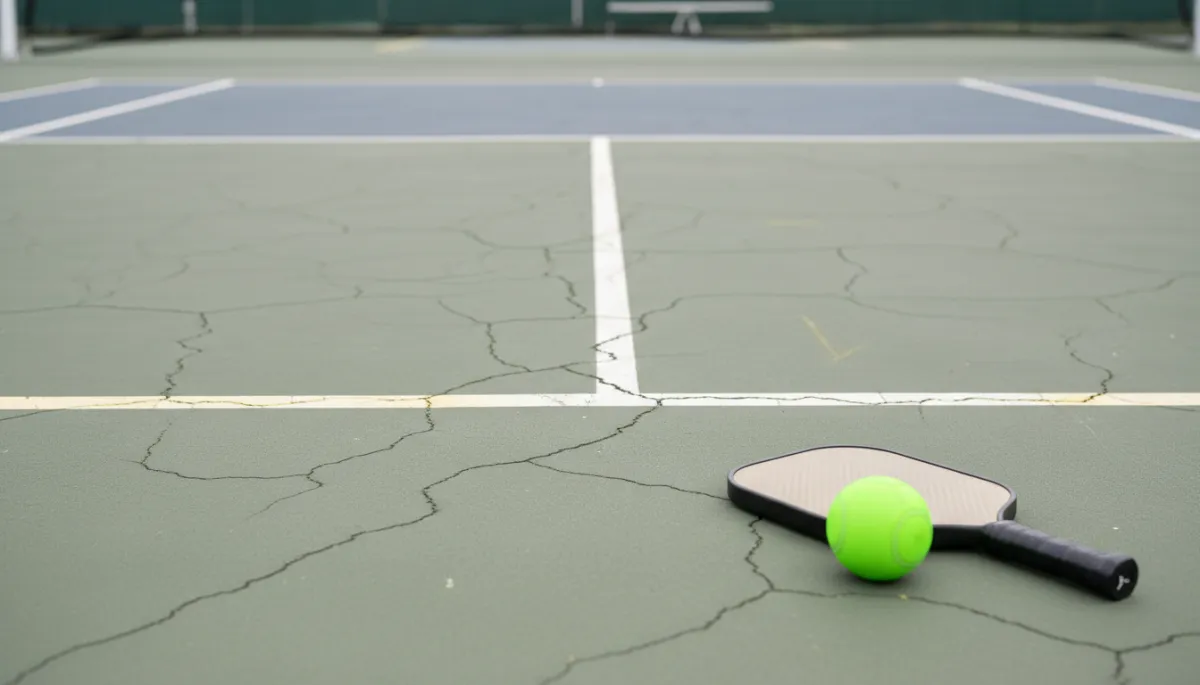
Early signs of wear are your cue to plan resurfacing before damage spreads.
Why Timely Resurfacing Matters for Everyday Players
For individual players and families, resurfacing isn’t just about aesthetics. A fresh, well-textured surface provides better grip, more predictable ball bounce, and a lower risk of slips and trips. That’s especially important for older players or anyone using pickleball as a low-impact way to stay active.
There’s also a financial angle. Addressing surface issues early with a proper resurface is usually far less expensive than waiting until the base layer is compromised and needs major reconstruction. Think of resurfacing like regular tune-ups for your car—it protects the bigger investment underneath.
Planning Your Resurfacing Timeline
A simple way to stay ahead is to note your court’s installation or last resurfacing date and schedule a professional inspection around the 4–5 year mark. Even if the court still looks decent, an expert can spot early warning signs and recommend whether you can wait a bit longer or should act soon.
If you’re unsure about your court’s age or condition, reaching out to a local coatings specialist for a quick assessment can give you peace of mind and help you budget for future work. A brief visit today can keep your court playable and enjoyable for years to come.
Whether you’re a casual weekend player or host neighborhood matches every night, understanding how often to resurface—and what signs to watch for—means you’ll spend more time enjoying the game and less time worrying about cracks underfoot. When you’re ready for expert guidance or a quote, you can contact Ace Coatings South to discuss the best resurfacing plan for your court.
